2026 Top Self-Adhesive Label Applicators for Global Buyers
In the rapidly evolving world of packaging, "Self-Adhesive Label Applicators" have become essential tools. According to industry expert John H. Reynolds, a leading figure in packaging technology, "The right applicator can significantly enhance operational efficiency." This statement highlights the importance of selecting the best equipment for various labeling needs.
As global buyers explore the 2026 market, understanding the capabilities of different self-adhesive label applicators is crucial. These machines vary in speed, precision, and adaptability. Each company has unique demands, making it necessary to assess specific functionalities. Customers must also consider potential scalability for future needs.
Insights from industry professionals can guide buyers in making informed decisions. However, there are challenges in choosing the right applicator. Some buyers may overlook maintenance aspects or compatibility with current systems. A careful evaluation of these factors is vital for long-term satisfaction and performance.

Overview of Self-Adhesive Label Applicators
Self-adhesive label applicators are vital in various industries. They enhance efficiency and provide a reliable method for labeling products. According to a recent industry report by MarketsandMarkets, the global market for label applicators is projected to reach $4.21 billion by 2026, driven by increasing demand in retail and e-commerce sectors.
These machines streamline the labeling process by automating tasks. They save time and reduce errors significantly. For instance, manual labeling can lead to inconsistencies, costing businesses both time and money. In 2021, a survey showed that 59% of companies reported improvements in productivity after implementing such systems. However, some organizations struggle with the initial investment and the need for operator training, which can hinder full utilization.
It's important to acknowledge that not all self-adhesive label applicators are created equal. Variations in technology can affect performance. Businesses need to assess their specific requirements carefully. Customization may be necessary to achieve optimal results. Keeping abreast of industry trends can help buyers make informed decisions. As the market evolves, adapting to new technologies will remain crucial for maintaining competitiveness.
2026 Self-Adhesive Label Applicators Overview
This chart illustrates the sales volumes of top self-adhesive label applicators evaluated by global buyers. The data provides insights into market preferences for different products in the category.
Key Features and Specifications to Consider
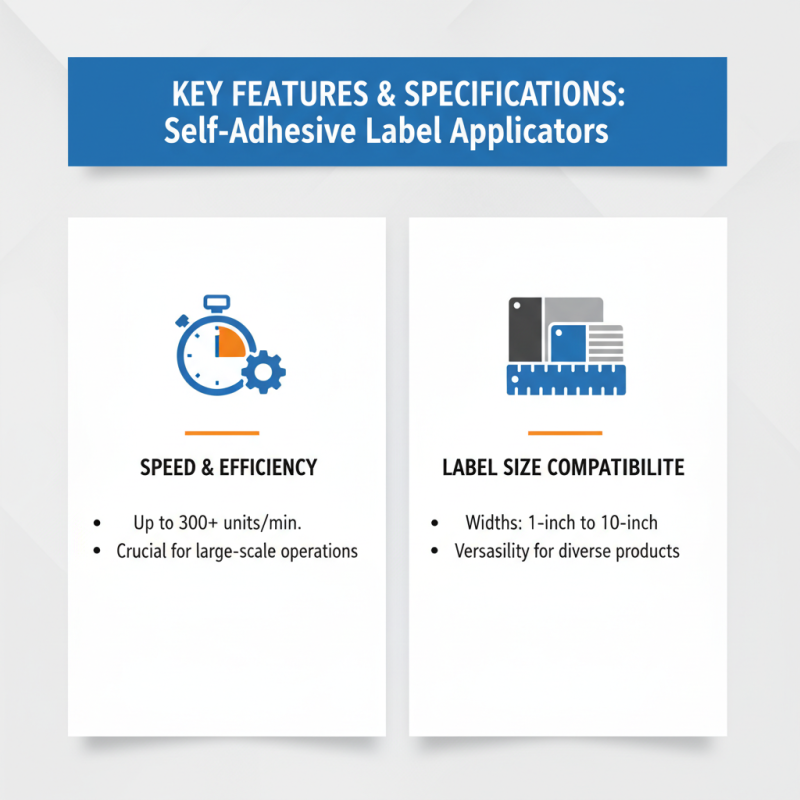
When choosing a self-adhesive label applicator, there are key features to consider. One vital aspect is the applicator's speed. Modern machines can apply labels at rates exceeding 300 units per minute. This efficiency is crucial for large-scale operations needing swift processes. Additionally, consider the label size compatibility. Many applicators handle labels from small 1-inch to large 10-inch widths, making versatility essential for diverse products.
Another feature is precision. A study from the Packaging Machinery Manufacturers Institute (PMMI) indicates that precision labeling can reduce wasted materials by up to 20%. Companies must invest in machines with adjustable settings to achieve this accuracy. Furthermore, durability matters. Equipment built from high-quality materials tends to last, minimizing downtime. Some applications encounter wear and tear, revealing shortcomings in lower-quality models.
Lastly, user-friendly design enhances operation. Interfaces should be intuitive, enabling quick training for new staff. According to a report from IBISWorld, businesses that prioritize operator comfort see a significant drop in errors. A machine should combine advanced technology with ease of use. This balance is vital, as it directly affects productivity and employee satisfaction.
Top Brands and Models for 2026
As we look towards 2026, the market for self-adhesive label applicators is set to grow significantly. Industry reports suggest the global market will reach over $4 billion by 2026. This growth stems from the rising demand in sectors like food and beverage, pharmaceuticals, and logistics. Companies seek equipment that enhances efficiency and accuracy in labeling.
Several standout models have emerged in this evolving landscape. High-speed applicators are increasingly favored for their ability to manage large volumes without sacrificing precision. Reports indicate that systems capable of applying labels at speeds exceeding 300 units per minute are gaining traction. Additionally, integrated solutions that combine printing and application are on the rise. These solutions streamline the process and minimize manual errors, which are often a significant concern in production lines.
While technology continues to advance, challenges remain. Many manufacturers struggle with maintenance and training staff on the latest machinery. The lack of skilled operators can lead to inefficiencies that offset technological gains. Consequently, investing in user-friendly technology and comprehensive training programs is crucial for maximizing productivity. As buyers explore their options, keeping these factors in mind will be essential for selecting the right applicator.
Market Trends and Innovations in Label Application
The self-adhesive label applicator market is evolving rapidly. Innovations in automation are driving efficiency. Modern machines now offer precision and speed. This trend caters to diverse industries, from food to pharmaceuticals. Buyers are seeking advanced features, such as touchscreens and easy integration with existing systems.
Sustainability is another crucial aspect. More manufacturers are exploring eco-friendly materials. Users want labels that are not only functional but also environmentally responsible. There’s a noticeable shift towards recyclable and biodegradable options. However, the cost can sometimes be a barrier for small businesses. They face the challenge of balancing eco-friendliness with budget constraints.
Quality control remains a significant concern. Some applicators do not consistently meet standards. This inconsistency can lead to operational disruptions. Buyers must prioritize reliability in their decisions. As the market grows, so does the need for thorough research. Various options are available, but not all will suit every need. Understanding these trends is vital for making informed choices.
Guidelines for Global Buyers on Compliance and Sourcing
When sourcing self-adhesive label applicators, global buyers should prioritize compliance. Understanding regional regulations is crucial. Different countries have unique standards for labeling. A thorough examination of these requirements can prevent costly mistakes.
Sourcing should not only focus on price. Quality and reliability matter too. Check if the manufacturer adheres to industry standards. Requesting documentation can reinforce trust. Engaging with suppliers who value transparency is beneficial. It fosters a better understanding of product capabilities.
Buyers also face challenges in ensuring consistent quality. Some manufacturers may struggle with production. Testing samples before committing to large orders helps mitigate risks. Regular communication with suppliers can alleviate doubts. Verify production processes when necessary to ensure compliance and quality control.

 +86 15921716191
 Contact Phone
 Contact Email