+86 15921716191


In today's global marketplace, efficiency is key to the success of export operations. Many businesses face challenges in managing labeling processes, leading to delays and errors. This is where Export Automated Labeling Solutions come into play. These solutions simplify and streamline label production, making it faster and more accurate.
Imagine a scenario where a shipment with incorrect labels results in costly returns. This situation is avoidable through effective automated labeling. By implementing these advanced tools, companies can reduce human error and enhance compliance with international shipping standards.
The benefits extend beyond just time savings. Using Export Automated Labeling Solutions can also lower operational costs significantly. However, companies must ensure proper integration with existing systems for optimal performance. Mistakes can occur during the implementation phase, highlighting the need for thorough testing. Investing in professional guidance can mitigate these risks and maximize the potential of automated solutions.

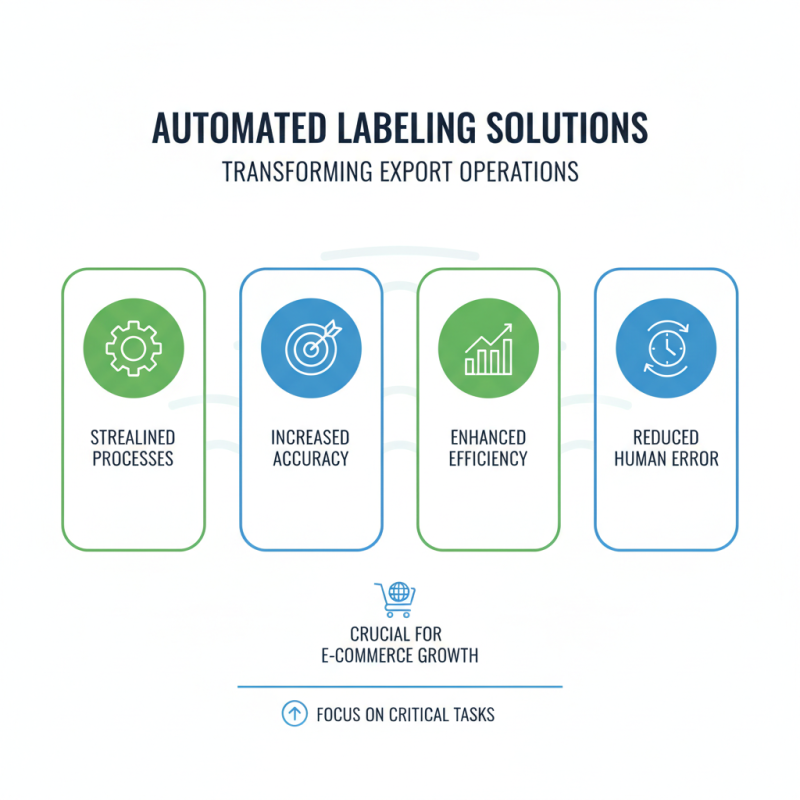
Automated labeling solutions are transforming export operations. They streamline processes and increase accuracy. These systems enhance efficiency by minimizing human error. With the rise of e-commerce, companies need reliable labeling tools. Manual labeling can lead to mistakes. Automated systems reduce the workload on employees. They allow teams to focus on more critical tasks.
Using automated labeling ensures consistency in product identification. Barcode and QR code technologies are vital. They help in tracking shipments effortlessly. Many exporters face challenges with compliance. Automated solutions ensure labels meet required standards. This eliminates delays in shipping due to incorrect labeling. Technology also enhances inventory management. Real-time data from labels can provide insights into stock levels.
However, transitioning to automated systems requires careful planning. Employees may need training to adapt to new technologies. Initial costs can be a concern for some businesses. It’s essential to evaluate the return on investment. Some may struggle with system integration. Yet, the potential for increased productivity is significant. Balancing cost and efficiency is a constant challenge in logistics.
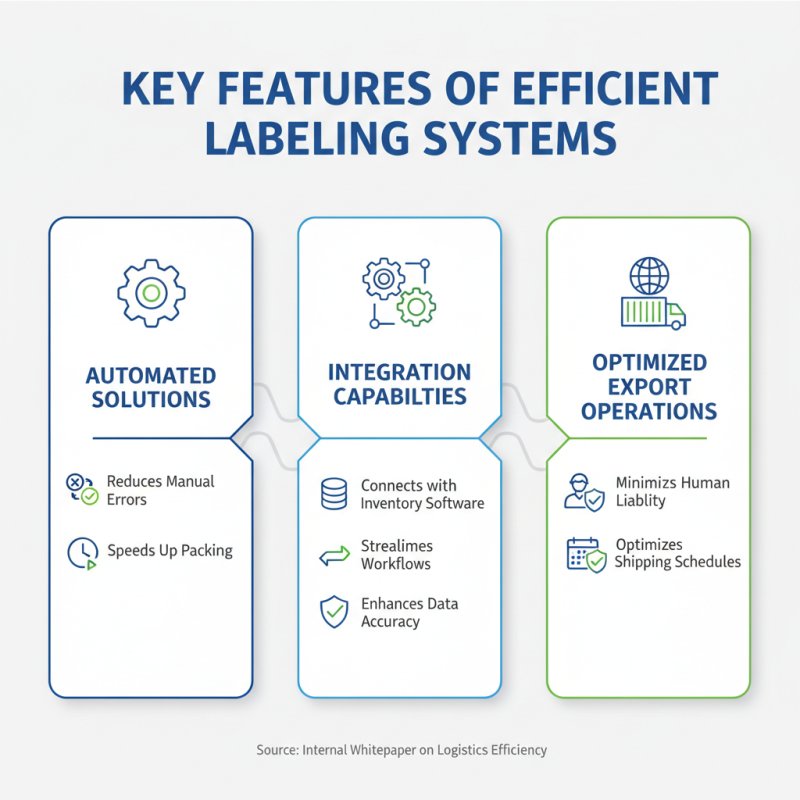
Automated labeling solutions significantly enhance export operations. These systems reduce manual errors and speed up the packing process, ensuring labels are printed and applied efficiently. A key feature of an effective labeling system is its integration capabilities. It connects with existing inventory management software, streamlining workflow and preserving data accuracy. This integration minimizes human liability and optimizes shipping schedules.
Another essential aspect is user-friendliness. A labeling system should be intuitive, allowing staff to quickly adapt to it. Employees spend less time on training, leading to better productivity. Design matters too; the system should support various labels, including barcodes and RFID tags. This flexibility ensures compliance with diverse shipping requirements, which can vary widely based on destination.
However, one might consider system maintenance. Regular checks and updates are critical to ensure smooth operation. Users may face challenges with outdated hardware or software, leading to delays. Thus, investing time in evaluating the long-term reliability of these solutions is vital. Addressing such issues early can significantly boost overall efficiency in export operations.
Automated labeling solutions significantly enhance export operations. The process reduces manual errors and increases efficiency. A report by the International Data Corporation states that companies leveraging automation in their logistics experience a 30% reduction in processing time. This shift also leads to improved accuracy, essential for compliance with international shipping regulations.
Automated labeling streamlines the generation of transport labels. It minimizes delays in shipping. Businesses can adapt quickly to changing market demands. According to industry statistics, firms utilizing automated systems report a 40% decrease in label-related discrepancies. This reduction not only saves money but also protects a company’s reputation.
Tips: Invest in a user-friendly labeling system. Choose software that integrates easily with existing platforms. Regularly review your automation processes to identify areas for improvement. Remember, even small adjustments can lead to significant gains. Don’t overlook the importance of training staff to use these tools effectively. Consider getting feedback from team members to foster a culture of continuous improvement.
| Solution | Key Features | Benefits | Cost |
|---|---|---|---|
| Automated Label Printer | High-speed printing, customizable labels, integration with shipping software | Reduces labor costs, increases labeling speed, minimizes errors | $2,000 |
| Label Management Software | Design templates, batch processing, real-time tracking | Streamlines labeling process, improves compliance, enhances visibility | $500/year |
| Automated Packing Solutions | Integration with labeling, automated packing processes, quality checks | Increases throughput, reduces packing errors, saves time | $10,000 |
| Barcode Scanning System | Real-time data capture, wireless connectivity, error reduction | Enhances accuracy, speeds up operations, reduces mislabels | $1,200 |
| RFID Labeling Systems | Contactless data capture, inventory tracking, multi-item processing | Increases efficiency, reduces manual labor, improves inventory management | $5,000 |
Efficient labeling solutions are crucial for export operations. They reduce errors and save time. A recent study indicates that automated labeling can decrease processing times by over 30%. This efficiency directly correlates with improved shipping timelines and reduced operational costs.
When comparing various labeling software, look for features like user-friendliness, integration capabilities, and customization options. A report from the Logistics Institute highlights that nearly 45% of companies struggle with integration. This suggests that having an adaptable system is essential.
Data accuracy is another concern. Research shows that 10% of labels contain errors. This can lead to shipment delays and costly re-labeling. Thus, identifying software with robust verification systems is vital. Businesses should also assess the scalability of options as they grow. An efficient labeling solution can significantly enhance export operations, but careful consideration is required.
Automated labeling solutions can significantly enhance export operations. According to a recent industry report, 70% of companies report improved efficiency after automation. Implementing these systems requires a clear strategy that aligns with business goals. Companies should first assess their current processes and identify bottlenecks. Understanding these pain points can help tailor an effective labeling solution.
Training staff on new systems is crucial. Research indicates that 30% of automation initiatives fail due to inadequate employee training. Regular workshops and hands-on practice can ensure that employees understand how to use new technology effectively. Involving teams early in the implementation process fosters a sense of ownership.
Data integration presents another challenge. Many existing systems may not seamlessly communicate with new labeling software. Organizations must prioritize software compatibility during implementation. Perhaps, a phased implementation approach can mitigate risks and allow for adjustments along the way. Reflecting on these challenges can reveal areas of improvement and ensure a smoother transition to automated labeling.