2026 Best Customized Automated Labeling Solutions for Businesses?
In today’s fast-paced business environment, efficiency is crucial. Companies seek ways to streamline their processes and reduce costs. Customized Automated Labeling Solutions have emerged as a vital tool in achieving these goals. They offer flexibility and precision, adapting to diverse labeling needs.
Many businesses find themselves overwhelmed by the variety of solutions available. Each company has unique requirements. Finding the right automated system can be challenging. The wrong choice might lead to operational inefficiencies and increased expenses. Businesses need to consider customization carefully. They must weigh the benefits against the potential pitfalls.
Companies that adopt the right Customized Automated Labeling Solutions often see significant improvements. Increased speed and accuracy in labeling enhance overall productivity. However, not all solutions are perfect, and reflection on performance is necessary. Businesses should continually assess their labeling processes. This ensures their solutions evolve with changing needs.
Overview of Customized Automated Labeling Solutions
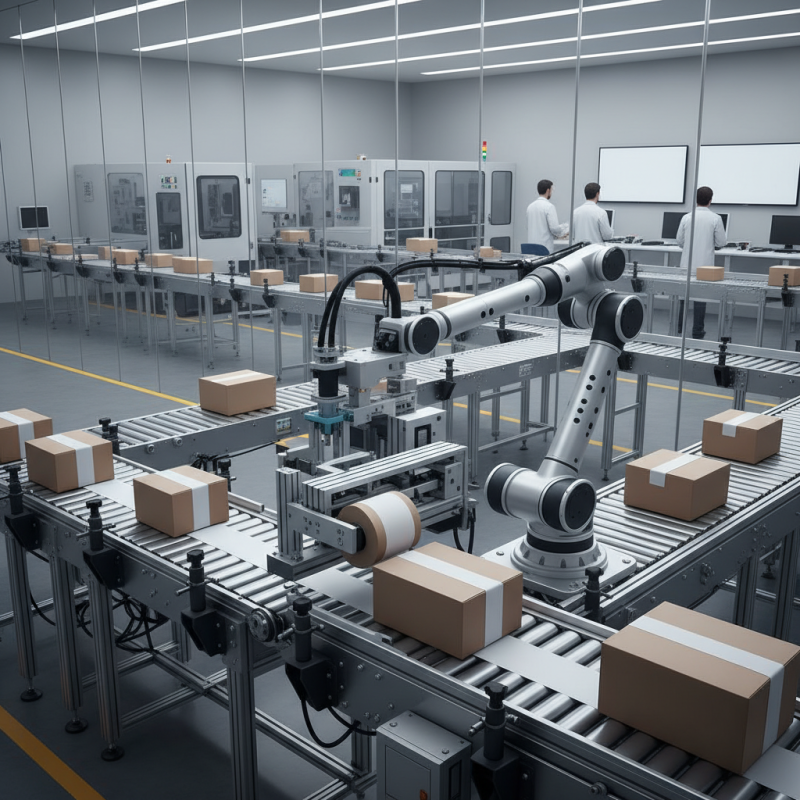
In today’s fast-paced business world, customized automated labeling solutions are essential. These systems streamline operations and enhance efficiency. They allow businesses to automate the labeling process, reducing human error and increasing productivity. Customization is particularly valuable, as it meets unique business needs.
Consider a warehouse that handles different products daily. An automated labeling system can adjust to label various items accurately. This flexibility saves time and minimizes waste.
However, businesses should carefully assess their specific requirements. A one-size-fits-all solution may not address every challenge, leaving gaps in the workflow. It's crucial to take a moment and reflect on what works best.
User experience is another important factor. Employees must find these systems easy to operate. If not, resistance to using new technology can emerge. Training is often necessary to ensure smooth adoption. Regular feedback from users can highlight areas for improvement.
Balancing efficiency with user-friendliness is key to long-term success in automated labeling.
Key Features to Look for in Labeling Automation Systems
When considering labeling automation systems, the key features are essential. Look for flexibility in label sizes and types. Customization is vital for various product lines. Systems should handle multiple formats seamlessly. This allows businesses to adapt easily to changing needs.
Speed and efficiency are also critical. Fast printing and application reduce downtime. Automated machines can often work around the clock. This consistency ensures a smoother workflow. However, speed shouldn't sacrifice quality. Labels need to adhere properly without defects.
User-friendly interfaces matter, too. Operators should navigate systems with ease. Training time should be minimal for new employees. Regular updates and support from manufacturers are necessary. This will keep systems running optimally. Despite advances, challenges exist. Some automation setups may struggle with unique product shapes. Businesses must assess their specific needs closely.
2026 Best Customized Automated Labeling Solutions for Businesses
| Feature |
Description |
Benefits |
Considerations |
| User-Friendly Interface |
Intuitive design allowing quick navigation and setup. |
Reduced training time and faster implementation. |
Ensure compatibility with existing systems. |
| Customizability |
Ability to tailor labels to specific requirements. |
Meets unique business needs and branding. |
Evaluate the extent of customization offered. |
| Scanning Integration |
Incorporates barcode and QR code scanning. |
Streamlines inventory management and tracking. |
Check for compatibility with scanning devices. |
| Speed & Efficiency |
High-speed printing and applying of labels. |
Increases throughput and reduces bottlenecks. |
Consider your production volume needs. |
| Multi-format Support |
Supports various label sizes and types. |
Flexibility for diverse applications. |
Test before making large purchases. |
| Data Management |
Handles data input and storage for labels. |
Improves accuracy and traceback of products. |
Assess data security features offered. |
Industry Applications of Automated Labeling Solutions
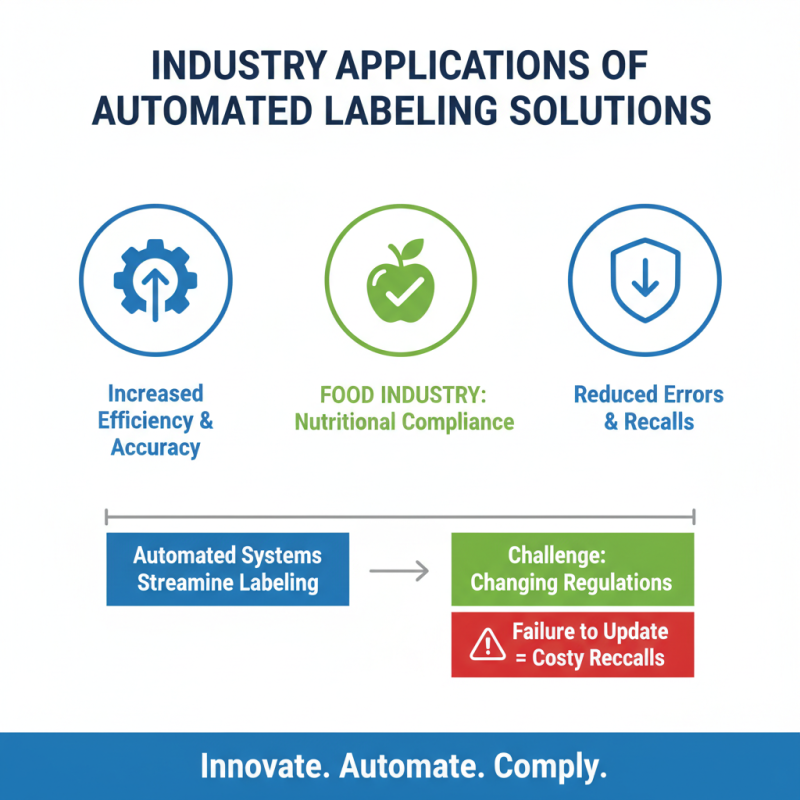
Automated labeling solutions are transforming various industries by enhancing efficiency and accuracy. In the food industry, for instance, compliance with nutritional labeling regulations can be complex. Automated systems help streamline this process, ensuring products are accurately labeled and reducing the risk of human error. However, companies must regularly update their systems to reflect changing regulations. Failing to do so can lead to costly recalls.
In the pharmaceutical sector, labeling accuracy is crucial. Automated labeling solutions can ensure that every product is correctly marked with essential information. This minimizes the risk of patient errors. Yet, it’s vital to monitor these systems consistently. Occasionally, discrepancies may arise due to software glitches or outdated data. Addressing these issues requires a mix of human oversight and automated processes.
Retail businesses also benefit from customized labeling solutions. Efficient labeling not only enhances product presentation but also improves inventory management. Still, the integration of such systems can present challenges. Employees may require training to adapt to new technologies. Regular feedback loops are essential for refining these systems. Each industry application presents unique opportunities and challenges, necessitating ongoing reflection and adjustment.
Comparison of Top Providers in the Market
In today's business landscape, customized automated labeling solutions are essential for streamlining operations. According to recent industry reports, companies that implement these solutions see up to a 30% increase in efficiency. Location-based customization in labeling helps reduce errors and improve brand consistency. This factor is critical as 72% of consumers value clear labeling, according to surveys conducted by labeling associations.
When evaluating providers, consider their integration capabilities. Many businesses struggle with systems that do not talk to each other. Providers that offer seamless integration with existing software can save time and reduce complications. Additionally, scalability is vital. As your business grows, your labeling needs will change. Providers should accommodate this without requiring a complete overhaul of your system.
Tip: Examine trial options to test a provider’s interface and features. This approach helps gauge usability and effectiveness firsthand.
It's crucial to reflect on your unique needs before making a decision. Not all solutions suit every business model. Look into customer support and maintenance services offered by potential providers. A lack of ongoing support can lead to frustrations, leaving companies with unexpected downtime.
Future Trends in Labeling Automation Technologies
In the rapidly evolving field of labeling automation, trends are shifting towards more customized and efficient solutions. A recent report from ResearchAndMarkets predicts a compound annual growth rate (CAGR) of 7.2% in the labeling automation market from 2021 to 2026. This growth reflects businesses' increasing need for accuracy and speed in labeling processes.
Emerging technologies, such as artificial intelligence and machine learning, are enhancing labeling automation. These innovations allow for real-time data analysis and adjustment of labeling processes. According to a study by Technavio, AI-driven systems can reduce operational costs by up to 30%. However, not all businesses are ready to adopt these advanced technologies. Many still rely on traditional methods, highlighting a gap in adoption that companies must address to remain competitive.
Moreover, sustainability is becoming a crucial aspect of labeling solutions. A survey by Smithers revealed that 25% of companies prioritize eco-friendly materials in their packaging and labeling. While this shift is promising, challenges remain. Implementing sustainable practices might lead to higher costs and operational complexities. Businesses must navigate these issues carefully to achieve both sustainability and efficiency in their labeling processes.
2026 Best Customized Automated Labeling Solutions for Businesses

 +86 15921716191
 Contact Phone
 Contact Email