How to Implement Quality Control Automation Systems Effectively?
In the fast-evolving field of Quality Control Automation Systems, industry experts stress the importance of effective implementation. Dr. Emily Roberts, a leading quality assurance consultant, once stated, "Automation is not just about technology; it's about enhancing quality." This insight emphasizes the need for a thoughtful approach in integrating automation systems.
Quality Control Automation Systems are designed to improve efficiency and accuracy in monitoring processes. However, many companies still struggle with effective implementation. They often underestimate the change management required for such transitions. For example, training employees to adapt to new systems can be challenging yet vital for success. Without adequate support, automation can lead to confusion and errors.
Moreover, a focus on the technology itself may overshadow underlying quality processes. Simply automating existing flawed practices does not guarantee enhanced outcomes. Continuous reflection on processes and outcomes is essential. Organizations must prioritize not just the implementation of Quality Control Automation Systems but also the culture that supports them. This holistic view can drive true improvements in quality.

Understanding Quality Control Automation Systems
Quality control automation systems are vital for modern industries. They help maintain product quality while reducing human error. Companies can integrate automated systems to enhance efficiency and accuracy. However, understanding these systems is the first step toward effective implementation.
To truly benefit from automation, it’s essential to grasp the technology involved. This includes learning about sensors, software, and data analytics. Each plays a critical role. Training staff on these technologies is crucial. Knowledgeable employees can make better use of automated systems. Investing in training might seem costly but it pays off by reducing errors over time.
Tips: Always test your automation setup before full-scale implementation. Conducting pilot projects helps identify potential flaws. Don’t rush the process. Reflecting on initial outcomes will provide insights for improvement. Regularly reviewing system performance can highlight areas for further enhancement. Continuous learning is part of the journey. Recognizing mistakes is vital for refining processes and achieving consistent quality standards.
Key Components of Effective Quality Control Automation
Implementing quality control automation systems requires a focus on several key components. One crucial aspect is the integration of real-time data collection. This allows for immediate feedback on production quality. Sensors and monitoring tools must be strategically placed along production lines. Data should be analyzed promptly to identify any deviations from quality standards.
Another component is the establishment of automated inspection processes. Utilizing machine vision systems can enhance accuracy. These systems detect defects that are often missed by human inspectors. However, reliance on technology alone can lead to complacency. Operators need training to interpret data and make informed decisions. Without thoughtful oversight, automation may inadvertently perpetuate errors.
Finally, updating and maintaining the quality control system is essential. Automation tools require regular testing and calibration. Neglecting this can expose production to risks. A proactive approach to maintenance can ensure ongoing reliability in quality assessments. It's important to remain critical of processes. Continuous evaluation fosters improvements and adaptability in the face of changing production demands.
Quality Control Automation Systems Metrics
This chart displays the key metrics for evaluating the effectiveness of Quality Control Automation Systems. Key performance indicators such as Response Time, Error Rate, Success Rate, and Throughput are essential for measuring the overall efficiency and reliability of automation processes.
Steps to Assess Your Current Quality Control Processes
Assessing your current quality control processes is critical for effective automation. Many companies underestimate this step. A 2022 report by the Quality Assurance Institute revealed that 70% of businesses do not analyze their existing QC systems thoroughly before automating. This oversight can lead to wasted resources and ineffective solutions.
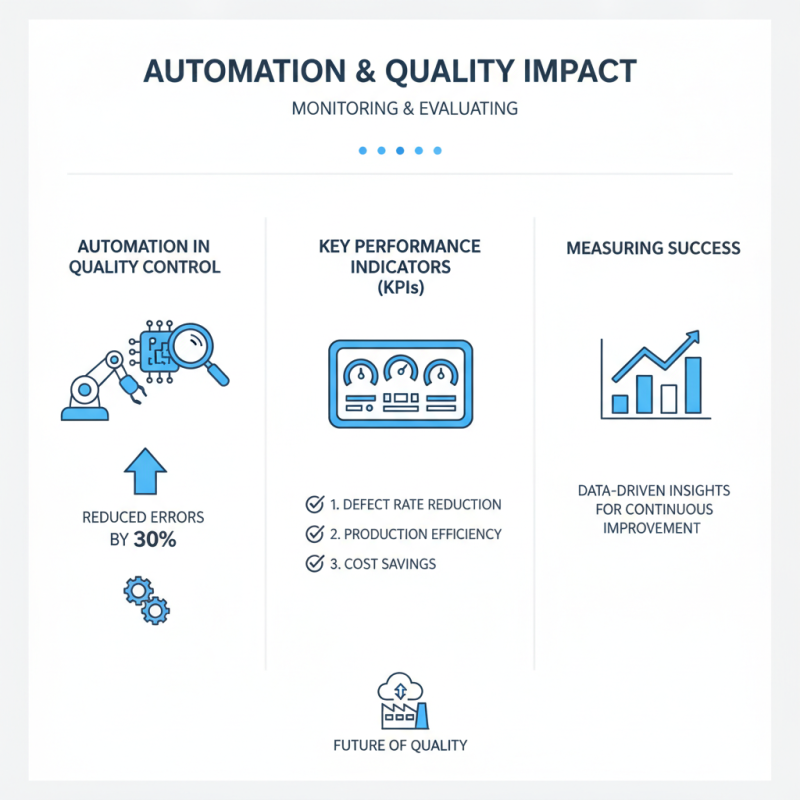
Identify key performance indicators (KPIs) in your current processes. Track metrics like defect rates and inspection times. A study by the International Journal of Quality & Reliability Management indicated that organizations that analyze KPIs show a 30% improvement in quality outcomes. Create a comprehensive map of your workflows. Visualizing these processes can help pinpoint bottlenecks and inefficiencies.
Involve your team in this assessment. Employee insights are invaluable. They often observe issues that data alone cannot reveal. Overlooking their feedback may result in a narrow understanding of the process flaws. Reflect on your current technology tools too. Are they providing the right data? Sometimes, outdated systems can hinder progress rather than facilitate it, leading to misinformed decisions.
Best Practices for Implementing Automation in Quality Control
When implementing automation in quality control, understanding the specific needs of your organization is crucial. Start by assessing the current quality processes in place. Identify the areas that require improvement or are prone to errors. This reflection helps in selecting the right automation tools. Collaborating with team members during this phase enhances insight. Their experiences can highlight shortcomings that may not be immediately visible.
Training staff is a key aspect of automation success. Without proper guidance, even the best systems can fail. Conduct workshops and provide resources to ensure everyone understands the new processes. Take time to gather feedback during this stage. Employees might feel overwhelmed as they adapt. Their concerns should be addressed promptly to nurture a sense of ownership, which increases the likelihood of system success.
Regularly monitoring automated systems is essential. This helps identify inefficiencies and potential failures early on. Establishing a feedback loop can drive continuous improvement. Encourage team members to report any issues they experience. Automation should enhance, not replace, human intuition. Sometimes, a balance needs to be struck between technology and human oversight to ensure quality remains high.
How to Implement Quality Control Automation Systems Effectively? - Best Practices for Implementing Automation in Quality Control
| Best Practice |
Description |
Expected Benefits |
Implementation Steps |
| Define Clear Objectives |
Establish what you aim to achieve with automation. |
Focused efforts and measurable goals. |
1. Identify stakeholders
2. Create a project charter |
| Choose the Right Tools |
Select software and hardware that fit your needs. |
Increased efficiency and performance. |
1. Assess current processes
2. Research available solutions |
| Train Employees |
Provide adequate training for users of the system. |
Improved user competency and system effectiveness. |
1. Develop a training program
2. Schedule training sessions |
| Monitor and Review |
Continuously track system performance and outcomes. |
Early detection of issues and ongoing improvements. |
1. Set KPIs
2. Conduct regular audits |
| Gather Feedback |
Collect input from users and stakeholders. |
Enhanced system usability and satisfaction. |
1. Create feedback channels
2. Analyze and act on feedback |

 +86 15921716191
 Contact Phone
 Contact Email