What are the Benefits of Fully Automated Packaging Lines?
In today's fast-paced manufacturing landscape, "Fully Automated Packaging Lines" have emerged as a game-changer for efficiency and productivity. Experts like Dr. Emily Chen, a leading authority in packaging technology, emphasize the transformative impact of these systems. She states, “Automated lines are no longer a luxury; they have become a necessity for competitive manufacturing.”
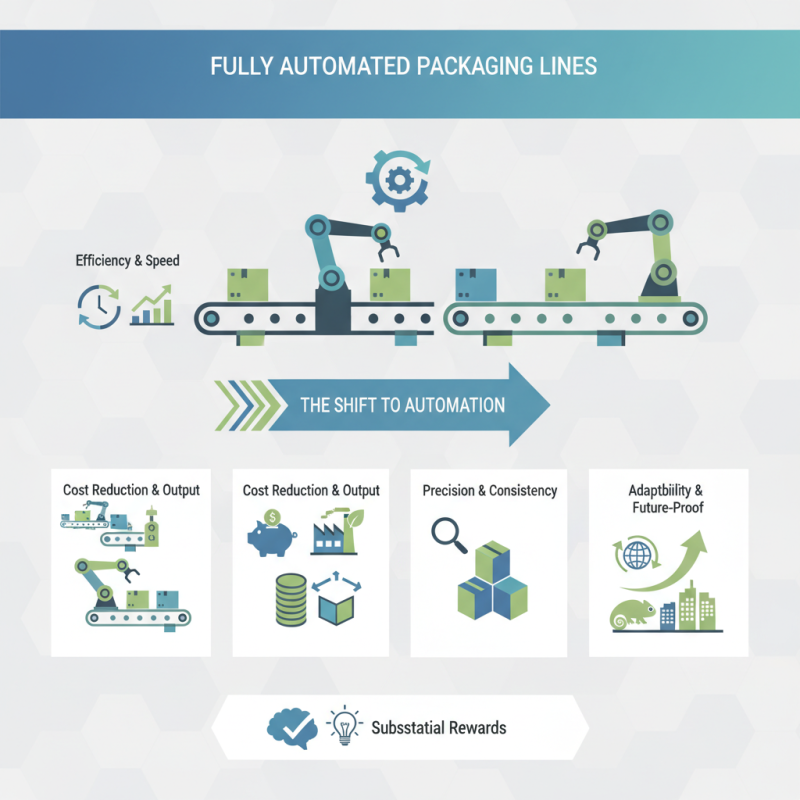
Fully automated packaging lines streamline the packaging process by reducing human error and enhancing speed. This shift minimizes labor costs while maximizing output, crucial for businesses aiming for sustainability. Companies implementing these systems often report significant improvements in throughput and operational efficiency. However, the initial investment can be daunting for some organizations.
Moreover, the reliance on technology raises concerns about job displacement. It's a complex trade-off that businesses must evaluate. Despite these challenges, the long-term benefits of fully automated packaging systems are undeniable. They offer precision, consistency, and the ability to adapt to ever-changing market demands. The takeaway is clear: while the road to automation presents hurdles, the rewards are substantial for those willing to embrace the future.
Advantages of Increased Efficiency in Automated Packaging
Automated packaging lines offer significant efficiency advantages. These systems streamline operations, reducing labor costs and minimizing human error. Production speeds increase dramatically, enabling businesses to meet high demand swiftly. This efficiency helps maintain competitive pricing. The reduction in packaging time also accelerates product delivery to consumers.
Moreover, automated systems enhance consistency and quality control. Products are packaged uniformly, which strengthens brand identity. Automation minimizes discrepancies and reduces waste. However, transitioning to fully automated systems can be challenging. Initial costs may deter some companies. There is also a learning curve for staff on new technologies.
The benefits, however, often outweigh these concerns. Increased efficiency leads to higher productivity levels. This shift allows companies to allocate resources to other areas, such as innovation or customer service. As industries evolve, automation becomes essential for sustaining growth. This potential can be both exciting and daunting. Balancing innovation with practicality is crucial for long-term success.
Cost Savings through Labor Reduction in Packaging Processes
In today's fast-paced manufacturing world, automated packaging lines are becoming increasingly essential.
One of the most significant benefits is labor reduction. A recent industry report indicates that companies adopting fully automated systems can see a 30% decrease in labor costs. This figure highlights the financial implications of efficiency gained through automation.
Eliminating the need for manual packaging tasks can also reduce errors. Human involvement often leads to inconsistencies. In contrast, automated lines deliver precise and uniform results. Reports show that automation can improve packaging accuracy by up to 98%. This level of precision minimizes waste and enhances product integrity.
However, transitioning to fully automated packaging can require substantial initial investment. Companies must weigh this upfront cost against long-term savings. It's essential to thoroughly analyze the return on investment. Some businesses may also struggle to adapt to new technologies. Training employees on automated systems is critical. Continuous support and updates can ensure system reliability and performance over time.
Enhancements in Product Quality and Consistency through Automation
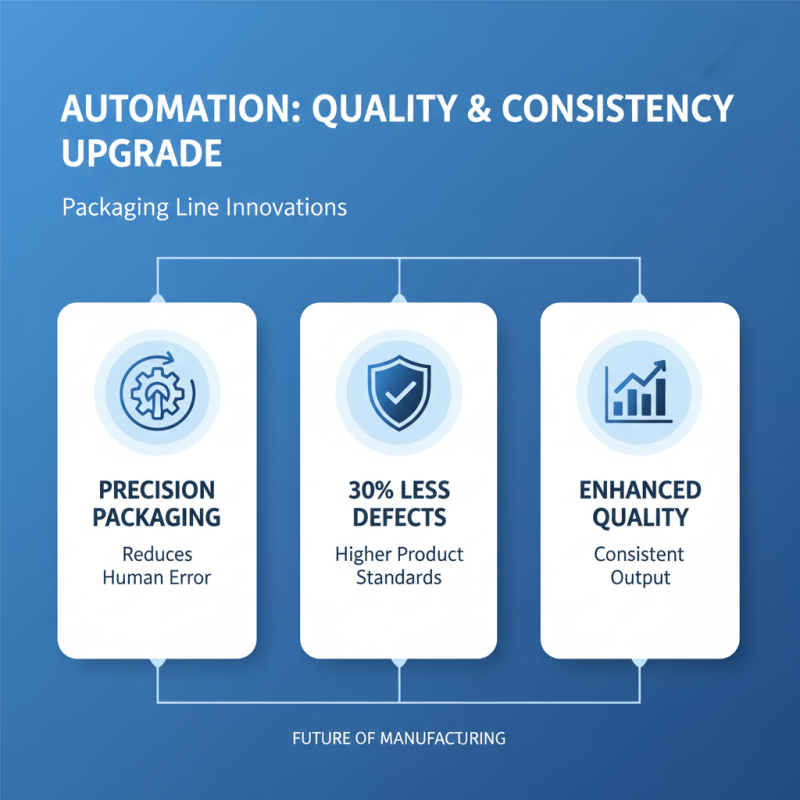
Automation in packaging lines significantly enhances product quality and consistency. Recent reports indicate that companies implementing fully automated systems see a 30% reduction in product defects. This improvement directly correlates with precision in packaging processes. Automated systems minimize human error, ensuring that each package meets strict quality standards.
In addition, automation leads to uniformity in product presentation. A study by the Packaging Automation Group highlights that automated lines provide 95% accuracy in pack sizes and weight consistency. Such reliability is crucial for customer satisfaction. Consumers expect products to look and feel the same each time they purchase, which fosters brand loyalty.
However, not every company transitions smoothly to automation. Some face challenges in employee training and system integration. Despite these hurdles, the potential benefits for quality enhancement outweigh the initial difficulties. Companies must reflect on their progress and adjust their strategies accordingly. Embracing automation can be demanding, yet the enhancements in product quality it brings are often worth the investment.
Improved Safety and Ergonomics in Packaging Operations
In modern packaging operations, safety and ergonomics are crucial. Fully automated packaging lines significantly enhance workplace safety. They reduce the risk of accidents caused by manual handling. Workers are less likely to suffer injuries related to repetitive motions or heavy lifting. By minimizing physical strain, these systems promote better health among employees.
Automation also provides a better working environment. Machines can operate in hazardous conditions that might be unsuitable for humans. This means that workers can focus on more complex tasks that require human judgment and creativity. Moreover, ergonomic design in these systems can lead to improved posture and reduced fatigue, which are often overlooked benefits.
Despite these advantages, there are challenges to consider. Some employees may feel uneasy about job security as automation increases. It's essential to balance technology with the workforce's needs. Training programs can empower workers to adapt to new roles. Open discussions about the transition to automation are vital. Such dialogue can help address concerns and foster a more collaborative atmosphere.
Benefits of Fully Automated Packaging Lines
Flexibility and Scalability of Fully Automated Packaging Lines
Fully automated packaging lines offer impressive flexibility and scalability. They can adapt to various product types and sizes without significant downtime. This adaptability is crucial for manufacturers responding to market demands. A manufacturer may need to switch from packaging small bottles to larger containers. An automated line can handle this transition smoothly, minimizing disruptions.
Scalability is another vital aspect. As a business grows, its packaging needs increase. Automated systems can scale operations efficiently. For instance, adding new packaging stations can enhance productivity without overhauling the entire system. This ability to grow with demand provides a sense of security for businesses in dynamic markets.
However, reliance on automated systems may present challenges. They require initial investments and careful maintenance. Human oversight is still essential to monitor performance and troubleshoot issues. Ensuring that staff are trained to manage and maintain these systems is critical. Companies must balance automation benefits with the need for skilled operators. Reflecting on these challenges may lead to better strategies for integrating automation while maintaining operational efficiency.

 +86 15921716191
 Contact Phone
 Contact Email