China Top Export Automated Labeling Solutions for Your Business?
In today's competitive market, businesses must adapt quickly to consumer demands. Export Automated Labeling Solutions have emerged as crucial tools for enhancing operational efficiency. These solutions streamline the packaging process, create professional labels, and ensure compliance with global standards.
Many companies are turning to automation for accuracy and speed. Manual labeling often leads to errors. Automated systems minimize this risk, ensuring that products are accurately labeled every time. The importance of clear, compliant labeling is vital for international trade.
However, some companies hesitate to adopt these technologies due to initial costs. They worry about the return on investment. It’s essential to analyze long-term benefits. The right Export Automated Labeling Solutions can drive growth, enhance brand reputation, and ultimately lead to greater market presence. Investing in these systems might not seem perfect, but it can be a necessary step forward.
China's Leading Automated Labeling Solutions: An Overview
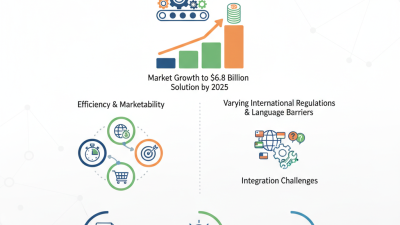
China has established itself as a leader in automated labeling solutions, with a significant presence in the global market. According to recent industry reports, the automated labeling market is expected to grow at a compound annual growth rate (CAGR) of over 6% through 2027. This growth is driven by increased demand for efficiency and precision in the packaging process. Industries such as food and beverage, pharmaceuticals, and cosmetics are leading the way in adopting these technologies.
Automated labeling solutions offer numerous advantages. They reduce labor costs and minimize human error. In sectors where compliance is critical, accurate labeling is essential to meet regulatory requirements. However, implementing these solutions can be challenging. Issues such as initial investment costs and the need for workforce training can deter some businesses. A report by a leading industrial analyst indicates that companies must assess their specific needs before adopting automation. An approach that involves gradual integration may yield better long-term results.
Additionally, companies in China are focusing on innovation. The incorporation of artificial intelligence and machine learning is enhancing labeling accuracy and reducing downtime. As technology evolves, businesses must stay informed. Understanding market trends and customer preferences is essential for optimizing labeling processes. Balancing automation with employee training ensures a smooth transition while maintaining product quality.
Key Industries Benefiting from Automated Labeling in China
Automated labeling solutions are transforming industries across China. These systems improve efficiency and consistency in packaging. Retail and food sectors are particularly benefiting. In retail, fast product turnover demands speedy labeling. Automated systems streamline this process, minimizing errors and saving time. Food manufacturers ensure compliance with labeling regulations while maintaining quality control.
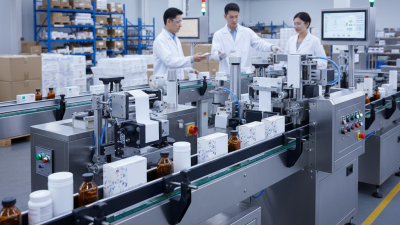
Healthcare is another key industry gaining from these solutions. Accurate labeling on pharmaceuticals is critical. Automated technology helps reduce human error. This can improve patient safety and operational efficiency. Additionally, the logistics sector relies heavily on precise labeling for shipment tracking. Misplaced labels can lead to costly delays. Automation mitigates these risks significantly.
While these systems offer many advantages, implementing them can be complex. Businesses must evaluate their specific needs carefully. Transitioning to automation involves initial costs and training for staff. Not all companies may see immediate improvements. Some may struggle with the integration process. It's crucial to assess each step thoughtfully to achieve the best results.
Innovations in Automated Labeling Technologies in China
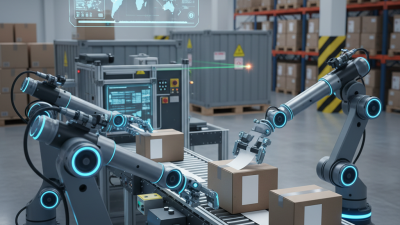
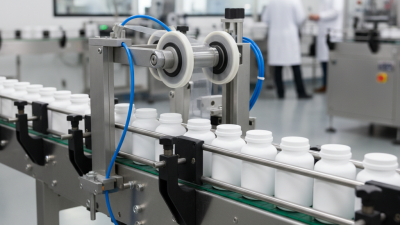
China has witnessed significant advancements in automated labeling technologies. These innovations cater to various industries, enhancing productivity and efficiency. Modern labeling machines now feature streamlined designs and improved accuracy, allowing businesses to scale operations seamlessly. Factors like speed and precision are essential in today’s fast-paced market.
The integration of artificial intelligence is a notable trend. AI-powered labeling systems can adapt to different products and labeling requirements. This flexibility offers businesses the ability to respond quickly to changing demands. Moreover, the use of sensor technologies ensures that labels are applied consistently, reducing waste and errors. However, not all companies have embraced these advancements fully, often due to budget constraints.
As the industry evolves, it's crucial for businesses to evaluate their needs. Investing in automated labeling can yield significant returns, but careful planning is necessary. Companies must consider employee training and ongoing maintenance. A hasty decision without thorough analysis could lead to challenges. By reflecting on these aspects, businesses can harness the potential of automated labeling technologies effectively.
Comparative Analysis: Chinese vs. Global Automated Labeling Systems
The global automated labeling systems market is witnessing significant growth, projected to reach approximately $7.98 billion by 2025. Chinese manufacturers are emerging as key players, driven by lower production costs and advanced technologies. In a comparative analysis, Chinese systems often provide greater affordability, making them attractive for small and medium-sized enterprises. However, the potential trade-off lies in the perceived quality and long-term reliability of these systems compared to their Western counterparts.
While Chinese labeling solutions offer competitive pricing, reports indicate a variance in durability and service support. For example, a survey highlights that around 20% of businesses using Chinese systems experience frequent malfunctions. This contrasts with global brands, which have invested heavily in R&D, resulting in superior service and extended product lifespans. Furthermore, user feedback often points to the ease of integration with existing production lines as a significant advantage for global systems.
Data from the International Packaging Association suggests that efficiency can be compromised with cheaper automated solutions. Companies rely on consistent performance to meet production targets. Thus, while the cost spectrum favors Chinese options, the long-term reliability and system integration capabilities of established global brands remain crucial factors in the decision-making process.
Best Practices for Implementing Automated Labeling Solutions in Your Business
Implementing automated labeling solutions in your business can enhance efficiency and accuracy. According to industry reports, over 70% of companies using such solutions experience improved production rates. Automation minimizes human error, making labeling consistent and reliable.
For effective implementation, assess your current labeling processes. Identify bottlenecks and areas where automation can deliver immediate benefits. Select a system that aligns with your production needs, ensuring it integrates smoothly with existing machinery. Regular training for staff is crucial. A well-trained team understands the technology and maximizes its benefits.
Tips: Evaluate vendor support and warranty terms. Sometimes, lower costs come with limited service. Invest in high-quality labels to prevent issues later. Testing label adhesion and durability is essential. Small mistakes can lead to significant losses. Remember, automation is not a one-time fix. Continuous evaluation will lead to better results over time.
Automated Labeling Solutions Implementation in Businesses

 +86 15921716191
 Contact Phone
 Contact Email