+86 15921716191


Choosing the right Automated Production Line Equipment is crucial for any manufacturing business. With advancements in technology, the options can be overwhelming. Various factors come into play, such as efficiency, cost, and compatibility with existing systems.
Consider the specific needs of your production processes. Identify bottlenecks in your current setup. This may reveal gaps your new equipment must fill. Not all automated solutions fit every business model. Some equipment might promise high output but fail to deliver in practice.
Reflect on scalability as well. Will your equipment adapt to future demands? The wrong choice could hinder growth. If you prioritize speed without factoring in quality, you may regret it later. Aim for a balance between automation and the human touch. The best Automated Production Line Equipment enhances productivity while maintaining product standards.
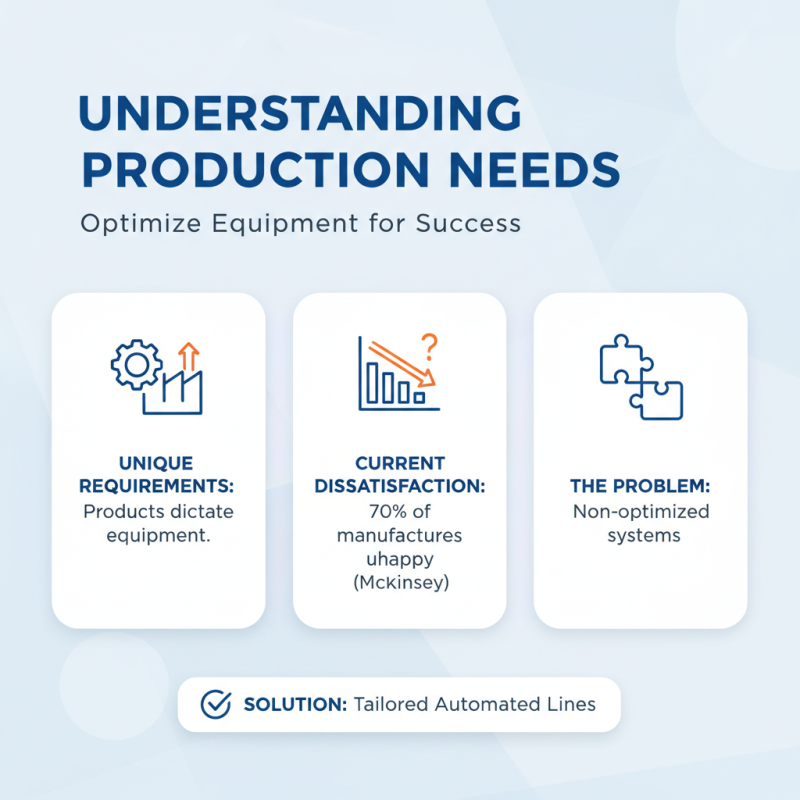
Understanding the needs of your production process is vital for selecting the right automated production line equipment. Each production line has unique requirements based on its specific products. According to a recent report by McKinsey, 70% of manufacturing companies express dissatisfaction with their current production systems. This dissatisfaction often stems from equipment that is not optimized for their needs.
Assessing efficiency is crucial. Identify bottlenecks in your current process. For instance, if your production speed is lacking, consider equipment that enhances throughput. A detailed analysis of cycle times and workflow can yield insights. Many firms overlook initial capacity projections. They may aim for high output but fail to account for product variability. This leads to equipment that underperforms in real-world conditions.
Moreover, consider scalability. A report from Deloitte indicates that 60% of manufacturing firms plan to increase automation in the next five years. Investing in adaptable equipment can provide flexibility. So, it is important to evaluate future growth alongside current needs. Ensure your choices not only meet today’s demands but can evolve with your business. Without this foresight, operations may face stagnation or increased costs down the line.
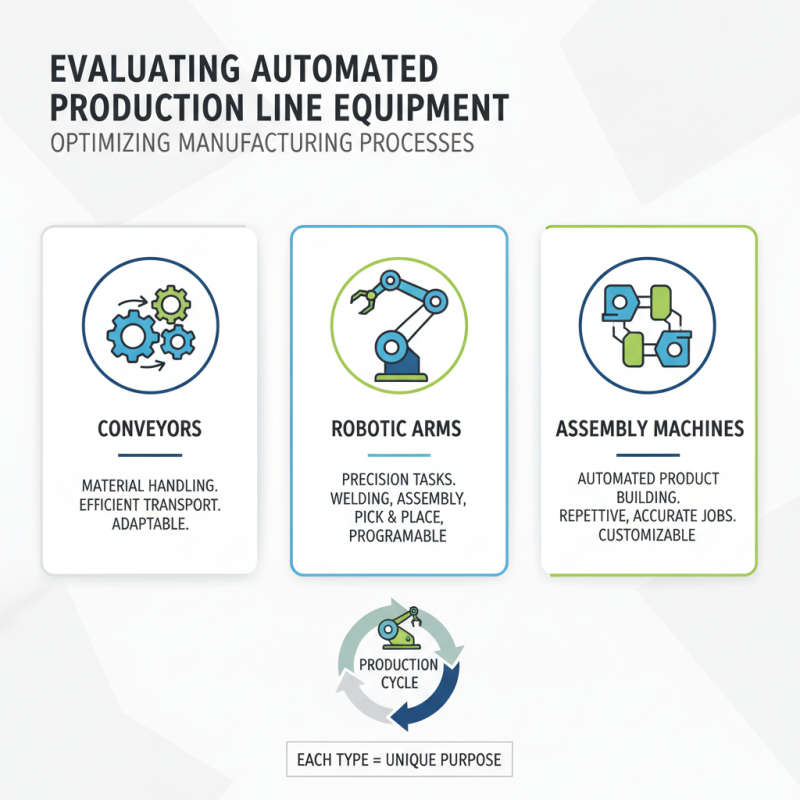
Evaluating the types of automated production line equipment is essential for optimizing manufacturing processes. Various equipment options exist, including conveyors, robotic arms, and assembly machines. Each type serves a unique purpose in the production cycle. For instance, conveyors are crucial for material handling. They transport items efficiently across different stages. Yet, they may not suit every production layout.
Robotic arms offer precision and flexibility. They can perform repetitive tasks consistently. However, integrating them into an existing line can pose challenges. Operators might struggle with programming and maintenance. Assembly machines can speed up production but often require careful calibration. Misalignment can lead to costly errors in the final product.
When assessing equipment, consider the specific needs of your production line. Understand the limitations of each type. Factors such as production volume, layout, and workforce skill level are vital. A mismatch can lead to operational inefficiencies. Investing time in evaluating these aspects can ultimately save costs and improve output quality. Emphasizing real-world implications will aid in making informed decisions.
Choosing the right automated production line equipment can be overwhelming. It's crucial to compare features and specifications carefully. Look at speed capabilities first. Some machines run faster but may sacrifice precision. Think about your production goals. A high-speed option might not be the best fit if your products require accuracy.
Next, examine versatility. Some equipment can handle different tasks, while others specialize. Flexibility might be a priority if you produce various items. However, specialized machines can be more efficient for specific tasks. Pay attention to the ease of maintenance, too. A machine that is hard to service can lead to prolonged downtime. This is often overlooked, but it can affect productivity.
Lastly, consider the technology involved. Some machines come with advanced features like AI integration, while others have basic controls. These sophisticated options might be appealing but could introduce complexity in operation. Simplicity can sometimes lead to better performance, especially for smaller teams. Reflect on your needs and capabilities before making a decision.
When evaluating automated production line equipment, cost efficiency and return on investment (ROI) are crucial. Start by understanding your production goals. What do you aim to achieve? Will the investment meet your needs? Analyze initial costs versus long-term savings. Sometimes, a cheap option may lead to high maintenance expenses later.
Tips: Look for equipment with energy-saving features. These can reduce utility bills over time. Consider the lifespan of the equipment too. A higher initial cost might result in better durability and performance.
Don't forget to assess the training costs. Employees may need time to adjust to new systems. This can affect your ROI. Take into account potential production delays during the transition phase. Each of these factors plays a role in your overall financial picture. Focusing solely on upfront costs can lead to miscalculations.
Lastly, seek feedback from operators. Their insights can reveal practical inefficiencies. Understand the balance between technology and usability. If equipment is too complex, it may not deliver the desired productivity. Strive for a solution that enhances workflow without overwhelming your team.
When choosing automated production line equipment, evaluating supplier reliability is crucial. According to industry reports, 43% of businesses experience equipment failures due to poor supplier support. This highlights the importance of researching suppliers thoroughly. Check their track record, client testimonials, and how they handle issues. Reliable suppliers offer prompt repairs and replacement services.
Tips: Look for suppliers with a history of quick response times. This can minimize downtime during production.
Support services extend beyond initial sales. Technological support is vital as systems become more complex. A good supplier provides training and updates on equipment use. Reports indicate that companies receiving comprehensive training see a 30% increase in efficiency. Consistent engagement with suppliers can also help in optimizing the production process.
Tips: Consider suppliers that offer long-term support plans. Assess their ability to adapt and upgrade equipment with emerging technology.
Choosing the right supplier goes beyond price. Reflect on their support quality. A lower cost may lead to unreliable service, disrupting productivity. Evaluate the supplier’s commitment to your success. Make informed decisions based on these factors.
| Criteria | Rating (1-10) | Supplier Service Level | Warranty Period | Maintenance Support |
|---|---|---|---|---|
| Reliability | 9 | High | 3 Years | 24/7 Support |
| Technology | 8 | Medium | 2 Years | Weekday Support |
| Cost Efficiency | 7 | High | 5 Years | Annual Maintenance |
| Customization Capability | 6 | Low | 1 Year | Limited Support |
| Lead Time | 8 | Medium | 2 Years | Flexible Scheduling |