Leave Your Message

Why Choose Industrial Automation Equipment Manufacturers?

Choosing Industrial Automation Equipment Manufacturers is not merely a purchasing decision. It is a long-term operational commitment.

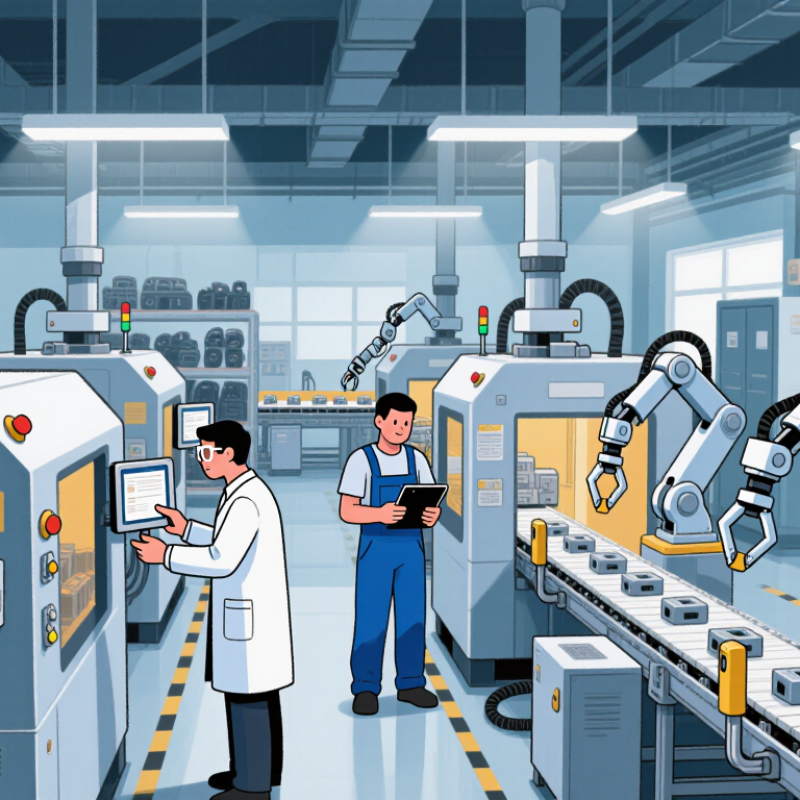
Reliable manufacturers understand how machines behave inside real factories. They study production speed, operator movement, energy use, maintenance access, and safety controls. Their equipment should communicate clearly with PLCs, robots, sensors, and manufacturing software. A polished brochure is not enough. Ask for test results, installation records, service procedures, and evidence from comparable facilities.

Technology leader Bill Gates offered a useful warning: “Automation applied to an inefficient operation will magnify the inefficiency.” This principle explains why experienced Industrial Automation Equipment Manufacturers begin with process analysis. They do not simply sell a robotic arm or an automated conveyor. They examine bottlenecks, reject rates, changeover time, and unplanned downtime. The best solution may be smaller than expected. Sometimes, better sensors and clearer data solve more problems than a complete production overhaul.

Trust also depends on what happens after delivery. A dependable manufacturer provides training, spare-part planning, remote diagnostics, and responsive technical support. Engineers should explain limitations honestly. No supplier is perfect. Even a strong system can require adjustments when dust, temperature, product variation, or staff habits differ from initial assumptions. That reality deserves attention.

The right Industrial Automation Equipment Manufacturers combine engineering knowledge with practical factory experience. They help companies improve consistency, protect workers, and measure return on investment. Their value appears in quieter motors, fewer stoppages, cleaner records, and predictable output. Choosing wisely means evaluating the whole partnership, not only the machine’s price.
Why Choose Industrial Automation Equipment Manufacturers?

What Industrial Automation Manufacturers Provide: Systems, Controls, and Robotics

Industrial automation manufacturers provide more than machines. They design connected systems that move materials, track production, and coordinate operators. A typical system may combine conveyors, sensors, safety devices, data collection, and production software. Engineers study cycle times, floor space, maintenance access, and product variation before recommending equipment. This practical assessment prevents an expensive system from solving the wrong problem.

Controls are the system’s decision layer. Programmable controllers receive signals from sensors and send precise commands to motors, valves, and actuators. Human-machine interfaces display temperatures, alarms, production counts, and downtime clearly. Proper control design also supports safe stopping, access monitoring, and controlled restart procedures. Technicians can diagnose faults faster when wiring, software, and documentation match the installed equipment.

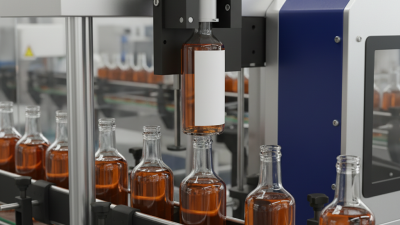
Robotics adds repeatable movement where lifting, sorting, welding, or packaging strains people or reduces consistency. Manufacturers select robot reach, payload, tooling, and vision systems around the actual workstation. Integration matters. A robot beside an unprepared process creates delays, not productivity. No project is perfectly smooth. Early tests may reveal glare, awkward handoffs, or unreliable gripping. Experienced teams adjust these details through trials, operator feedback, and measured results. That feedback is easy to underestimate. Reliable manufacturers remain available after installation, providing training, maintenance guidance, and practical modifications as production changes.
Industry Scale: 541,302 Industrial Robots Installed in 2023 (IFR)

Why Choose Industrial Automation Equipment Manufacturers?

The scale of industrial automation is no longer theoretical. According to the International Federation of Robotics, 541,302 industrial robots were installed worldwide in 2023. This figure shows sustained demand across automotive, electronics, logistics, and general manufacturing. It also signals a practical challenge: factories need equipment that performs reliably beyond demonstrations.

Experienced industrial automation equipment manufacturers can match robots, controllers, sensors, conveyors, and software to real production conditions. A capable engineering team studies cycle time, payload, workspace, dust, temperature, and operator movement before recommending a system. During commissioning, technicians can adjust motion paths and reduce unnecessary stops. Small delays matter. A two-second improvement per cycle may create thousands of additional units annually. However, automation is not automatically efficient. Poor layout decisions, weak training, or difficult maintenance can make an expensive system frustrating. That risk deserves honest evaluation.

Tips: Request measured cycle-time data, service response details, spare-parts availability, and operator training plans. Ask for a factory acceptance test using realistic materials. Check whether the equipment can communicate with existing systems. Leave room for future expansion, but avoid buying capacity your process cannot yet use. A detailed site assessment often reveals overlooked issues, such as cable wear, limited access, or inconsistent product dimensions. Reliability comes from evidence, not confident promises.

Why Choose Industrial Automation Equipment Manufacturers?

Global industrial robot installations reached 541,302 units in 2023, demonstrating the sustained scale and importance of industrial automation.

Global annual industrial robot installations, 2013–2023. Source: International Federation of Robotics (IFR), World Robotics reports.

Business Value: Automation May Raise Productivity by 20–25% (McKinsey)

Why Choose Industrial Automation Equipment Manufacturers?

Business Value: Automation May Raise Productivity by 20–25% (McKinsey)

Choosing an industrial automation equipment manufacturer can turn a productivity target into a measurable operating plan. McKinsey research indicates that automation may raise productivity by 20–25% in suitable processes. The estimate is not a promise. Results depend on workflow design, equipment quality, and employee training. An experienced manufacturer studies cycle times, material movement, and recurring stoppages before recommending a system.

The value appears on the factory floor. A vision sensor checks each component under consistent lighting. A robotic arm places parts within a repeatable tolerance. Production software records delays instead of relying on handwritten notes. These details help supervisors identify bottlenecks during a normal shift. Skilled manufacturers also provide simulation, factory acceptance testing, installation support, and operator instruction. Reliable service matters when one failed controller can interrupt an entire production line.

Automation is not always the right answer. Some low-volume tasks may cost more to automate than to improve manually. Labor savings can also be overstated when maintenance, integration, and software updates are ignored. A careful manufacturer should explain these limits clearly. The strongest proposals connect investment with baseline data, expected downtime, safety requirements, and payback assumptions. Progress should be reviewed after commissioning, because the original design may need adjustment. Real factories rarely behave perfectly.

Risk Control: ISO 10218, IEC 61508, and NIST Cybersecurity Practices

Choosing an industrial automation equipment manufacturer is largely a risk-control decision. A capable supplier understands how robots, controllers, sensors, and guarding behave together. ISO 10218 provides a practical foundation for robot safety, including protective measures, emergency stops, and safe operating zones. During commissioning, engineers should inspect the actual cell, not only review drawings. A loose cable or poorly positioned access gate can defeat an otherwise strong design.

IEC 61508 adds a lifecycle view for functional safety. It encourages hazard analysis, defined safety functions, verification, validation, and controlled changes. This matters when a light curtain stops motion or a safety controller removes power. The response must be predictable. It must also be tested under realistic faults. No assessment is perfect. Assumptions can fail when production pressure changes procedures. Experienced manufacturers document test results, train operators, and provide maintenance instructions that technicians can follow beside the machine.

Cybersecurity now belongs inside equipment selection. NIST cybersecurity practices support asset identification, access control, network segmentation, secure configuration, monitoring, and incident response. A factory laptop should not connect freely to every controller. Use role-based permissions, protected service ports, current backups, and reviewable logs. Ask how updates are tested before deployment. Ask who can change logic at 2 a.m. These questions reveal operational maturity. Strong suppliers also explain limitations honestly, because a certified component cannot protect an unmanaged network or careless password practice.

Selection Criteria: Compare OEE, MTBF, ROI, Integration, and Support

Choosing an industrial automation equipment manufacturer requires more than comparing catalog prices. In plant evaluations, I examine OEE from actual production records, not polished demonstrations. OEE should show availability, performance, and quality across several shifts. A machine reaching 92% OEE for one week proves little. Ask for data from similar loads, operators, and maintenance conditions. Short records can mislead.

MTBF reveals durability, but only when its calculation is transparent. Request failure definitions, service logs, and repair intervals. Then estimate ROI using labor savings, scrap reduction, energy use, training, and downtime. A payback claim ignoring integration costs is incomplete. Include spare parts and commissioning hours. ROI must survive a cautious spreadsheet.

Integration deserves a physical test. Check communication protocols, safety interfaces, data access, and changeover time. Let the equipment exchange signals with existing controllers before purchase. Support quality appears in response times, diagnostic clarity, technician coverage, and documentation. Ask who answers at 2 a.m. during a stopped line. No score is perfect. I have seen strong machines fail because operators disliked the interface. A practical trial with skeptical operators often exposes that weakness earlier.

Why Choose Industrial Automation Equipment Manufacturers? - Selection Criteria: Compare OEE, MTBF, ROI, Integration, and Support
Selection Criterion Key Metric Typical Industrial Reference Range What a Strong Manufacturer Proposal Should Demonstrate Verification Method Suggested Evaluation Weight
Overall Equipment Effectiveness (OEE) Availability × Performance × Quality 60%–75%: common starting range for many production environments;
75%–85%: strong operational performance;
85% or higher: widely used world-class reference level.
A clear plan to reduce downtime, speed losses, changeover time, and quality defects. The calculation should follow consistent definitions aligned with recognized OEE practices such as ISO 22400-based performance measurement. Request baseline OEE data, downtime categories, production-speed records, scrap rates, and a pilot result measured over a representative production period. 25%
Mean Time Between Failures (MTBF) Operating time ÷ number of functional failures MTBF varies significantly by equipment type, duty cycle, environment, and maintenance policy. A reliable comparison should use the same operating conditions and failure definition rather than a universal target. Published reliability assumptions, maintainable component design, condition-monitoring options, spare-parts availability, and historical failure data presented by equipment class. Review maintenance records, warranty-return data, failure-mode analysis, preventive-maintenance intervals, and the proposed calculation method. Exclude planned maintenance from failure counts. 20%
Return on Investment (ROI) Net annual benefit ÷ total project investment Many automation projects target approximately 12–36 months for simple payback, but the result depends on labor cost, throughput, scrap reduction, utilization, energy use, and required integration work. A transparent business case including equipment, engineering, software, installation, training, maintenance, energy consumption, downtime during commissioning, and expected productivity gains. Validate the model with measured baseline costs, conservative production assumptions, sensitivity analysis, total cost of ownership, and a defined payback period. 20%
System Integration Interoperability, data access, scalability, and commissioning effort Strong systems commonly support open industrial communication and information models, such as OPC UA, MQTT, REST APIs, standard PLC communications, and structured production data compatible with ISA-95 concepts. Documented interfaces, cybersecurity controls, data ownership terms, modular architecture, compatibility with existing control systems, and a clear integration responsibility matrix. Conduct a proof of concept using real signals. Test tag mapping, alarm handling, historian connectivity, network recovery, user permissions, data export, and interoperability with existing MES or SCADA systems. 20%
Technical Support and Service Response time, resolution time, spare-parts availability, and training coverage Typical service agreements define priority-based response targets, such as same-business-day remote response for critical incidents and scheduled on-site support when remote resolution is insufficient. Local or regional service capability, documented escalation procedures, remote diagnostics, preventive-maintenance training, spare-parts lead times, software update policy, and lifecycle support commitments. Review the service-level agreement, support hours, escalation contacts, installed-service coverage, critical spare-parts list, training plan, and anonymized service-performance records. 15%

Reference values are general industrial evaluation ranges rather than guarantees. Actual performance should be normalized for equipment type, operating hours, product mix, process complexity, site conditions, labor rates, and maintenance practices.