Top RFID Labeling Systems for Industrial Applications
Industrial RFID labeling is more than printing a tag and attaching it to a carton. It connects physical products with digital records as they move through production, storage, and shipping. A suitable system must encode RFID inlays, print clear text or barcodes, and verify that each tag works. In a busy packaging line, even a brief pause can leave boxes waiting beside the conveyor. Small details matter. Label material, tag placement, surface type, and nearby metal can all affect read performance.
This guide explores top RFID labeling systems for industrial applications and the tasks they are designed to handle. It compares practical factors such as print speed, encoding reliability, integration options, maintenance, and support for different label formats. Rfid Labeling Systems For Industry can help teams improve visibility and reduce manual scanning, but results depend on the setup. No single printer fits every facility. A system that performs well on cardboard cases may need adjustments for plastic containers or metal equipment. Buyers should ask how rejected tags are detected and what happens when a network connection fails. Test real products. A controlled demonstration is useful, but it may not reflect dust, vibration, shift changes, or rushed operators. Those limits deserve attention. The aim is to help readers compare options realistically, identify questions for vendors, and choose equipment that fits their workflow rather than a specification sheet alone.
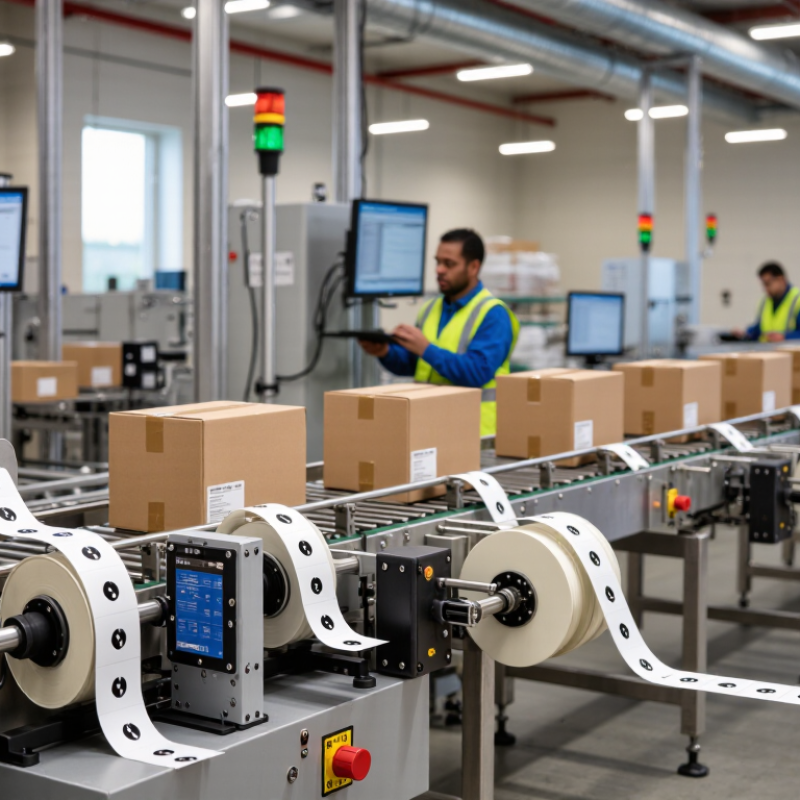
What RFID Labeling Systems Are and How They Work
An RFID labeling system links encoded labels, printer-encoders, readers, antennas, and inventory software. During printing, the encoder writes a unique identifier onto the label’s chip. The label is then attached to a carton, tool, or component. No barcode scan. A reader sends radio waves; passive labels use that energy to respond with stored data. Software filters repeated reads and matches identifiers to records, such as a pallet’s location or production lot.
The system can capture multiple labels as items pass a doorway or conveyor. In practice, read quality depends on antenna placement, distance, and label orientation. Metal surfaces and liquid-filled packages can interfere with radio signals, so industrial labels may need different inlays or spacers. RAIN Alliance’s 2024 market report estimated that 52.8 billion RAIN RFID tag chips shipped in 2023, indicating substantial industry use. Shipment volume, however, does not guarantee accurate readings at a particular site.
A useful setup begins with a real workflow: receiving, work-in-process tracking, or finished-goods dispatch. Teams should test labels on actual materials and at normal conveyor speeds. A tag that reads well on a desk may fail beside a steel fixture. That detail is easy to underestimate. Read zones also need tuning to reduce stray reads from nearby inventory. Data quality still depends on disciplined encoding and system integration; RFID does not fix an inconsistent item record.
Core Components of an Industrial RFID Labeling System
Top RFID Labeling Systems for Industrial Applications
Core Components of an Industrial RFID Labeling System
A reliable system begins at the label. An RFID inlay combines a microchip and antenna, then bonds to a material suited to the surface. Paper may work on clean cartons; metal equipment often needs a purpose-built label to reduce signal interference. A thermal printer-encoder prints variable details and writes the electronic identifier. A verification step checks that encoding succeeded before labels reach the line.
RAIN Alliance reported an estimated 46.1 billion RAIN RFID tag shipments worldwide in 2023, illustrating the technology’s industrial scale. Volume alone, however, does not guarantee accurate reads.
Readers and antennas form the capture layer. Antenna placement should match conveyor width, product spacing, and tag orientation; a few centimeters can change read performance. Middleware filters duplicate reads and links identifiers to production or inventory records. Integration with enterprise systems makes those events useful to operators, not just visible on a reader dashboard.
Commissioning should include real products, moving loads, and nearby metal. Still, layouts are rarely perfect on the first pass. Record missed reads and false reads, then adjust power, antenna angle, or label position. Keep the test conditions documented, so later maintenance can distinguish a genuine process change from a setup that quietly drifted.
Types of RFID Labeling Systems for Industrial Use
Industrial RFID labeling systems are defined by tag frequency, construction, and how labels enter the workflow. Passive UHF labels suit pallet identification, dock doors, and conveyor tracking because fixed readers can capture many tags quickly. HF labels offer shorter read ranges and can work well for controlled access to tools, work-in-process bins, or maintenance records.
RAIN Alliance’s 2024 market report estimated that 52.8 billion RAIN RFID ICs shipped in 2023.
That scale signals broad adoption, not guaranteed performance in every plant.
Metal surfaces call for purpose-built on-metal labels, often with a spacer that limits interference. For harsh environments, rugged labels can use thicker facestocks and adhesives that tolerate abrasion, moisture, or heat. Active and battery-assisted tags can extend read range, but add cost and maintenance considerations. Some systems print and encode labels inline; others apply pre-encoded labels at a workstation or conveyor. The choice affects throughput.
A neat lab test can mislead: nearby liquids, metal racks, and tag orientation may change read results. Test labels on actual containers and moving loads before selecting a system.
Leading RFID Labeling Systems and Their Key Capabilities
Industrial RFID labeling systems combine printing, encoding, verification, and application in one workflow. A thermal-transfer printhead can add readable text and barcodes while an encoder writes data to the label’s RFID inlay. Reliable systems check each tag before it leaves the station. A failed read can trigger a reject or reprint, reducing the chance of sending an unreadable label downstream. Small details matter.
Leading systems offer different capabilities for different production environments. Automated print-and-apply units suit high-volume lines, where consistent placement on cartons or containers matters. Desktop or batch systems can be more practical for lower volumes and changing label formats. Look for adjustable encoding power, clear error reporting, and connections to inventory or manufacturing software. Placement matters. A label beside metal or liquid may need a specialized inlay and careful testing, since nearby materials can affect read performance.
Durability is another key measure. Labels may need to withstand abrasion, moisture, heat, or repeated handling, so the face material and adhesive should match the actual surface and conditions. Not every line needs full automation. A fast machine can still create costly errors if operators cannot diagnose encoding failures or load the correct label stock. Even a well-configured system may need adjustment after installation; real products and line speeds rarely match a perfect test setup.
How to Select and Integrate an RFID Labeling System
Top RFID Labeling Systems for Industrial Applications
Selecting an RFID labeling system starts with the job, not the printer. Estimate daily label volume, line speed, and the size of each label. Then check whether the system can print clearly and encode tags in one pass. A label that looks sharp may still fail if its chip cannot be read reliably. Test samples on the actual cartons, pallets, or products.
Consider the working environment. Metal surfaces can weaken reads, while moisture and rough handling can damage unsuitable labels. Ask for materials tested against your real conditions, including temperature and cleaning routines. Keep it measurable. Record read rates at different distances and conveyor speeds before choosing a configuration. A small test can expose a costly mismatch.
Integration needs equal attention. Confirm that the system can receive label data from your production or warehouse software, and decide how it will handle rejected or duplicate records. Plan space for the printer, scanner, and a safe label-replenishment point. A common planning miss is assuming the existing network and workflow will need no changes. They often do. Start with one line, train operators, and review errors for several shifts. The setup may still need adjustment; that is useful evidence, not a reason to skip testing.

 +86 15921716191
 Contact Phone
 Contact Email