+86 15921716191
Leave Your Message
-
Contact WhatsApp
-
 Contact Phone
 -
 Contact Email
Choosing an Automatic Price Labelling Machine is not simply a matter of buying the fastest model. The right machine must match your products, packaging surfaces, label sizes, and daily production rhythm. A small grocery distributor may need a compact tabletop unit. A busy warehouse may require conveyor integration, barcode verification, and automatic product spacing.
“Reliable labelling begins with understanding the product flow, not the machine brochure,” says Michael J. Duffy, a packaging automation consultant. This practical view is important. A machine can appear impressive during a demonstration, yet struggle with dusty cartons, uneven containers, or frequent label changes. That difference becomes expensive over time.
Look closely at application details. Can the system label glass, plastic, cardboard, or flexible packaging? How accurately does it place labels at different speeds? A useful test should include your real products, not identical sample boxes. Ask operators to perform a changeover. Watch their hands.
Small details matter.
Check the control panel, sensor adjustment, maintenance access, and spare-part availability. Confirm whether the printer, scanner, and weighing system can communicate with your existing software. Total cost includes training, downtime, electricity, consumables, and service visits.
There is also room for honest doubt. The cheapest machine may be suitable, but only when production demands remain stable. A premium system may be unnecessary for seasonal work. Choosing by price alone, however, is a weak decision. The best Automatic Price Labelling Machine should deliver consistent placement, manageable operation, and dependable performance across ordinary working days, not only during a polished sales demonstration.
How to Choose an Automatic Price Labelling Machine?
What Is an Automatic Price Labelling Machine?
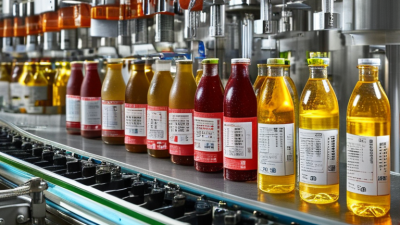
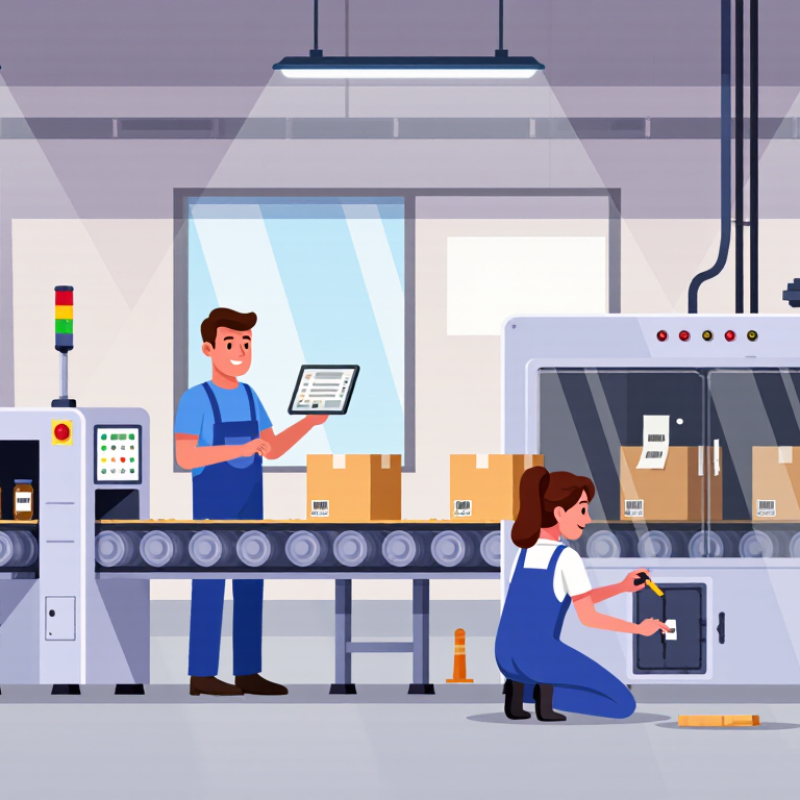
An automatic price labelling machine applies printed price labels to products without continuous manual placement. It usually combines a label printer, product sensor, conveyor, and applicator. The system reads product data, prints the required price, and places the label at a controlled position. In a busy store or packing area, this can reduce repetitive work and inconsistent placement.
Market data supports this shift. Grand View Research estimates that the global automatic labelling machine market will grow steadily through 2030, driven by retail, food, and logistics automation. A 2023 report from PMMI also identifies labour shortages and production efficiency as major packaging equipment concerns. However, automation is not automatically accurate. Poor product spacing, reflective packaging, or outdated pricing data can still create visible errors.
Tips: Check label accuracy during real production. Test irregular packages, wet surfaces, and small fonts. Confirm the machine supports your software and barcode standards. Ask for documented application speed, placement tolerance, and cleaning procedures. A practical trial is more useful than a perfect sales demonstration. Also, measure total operating cost, including waste labels, maintenance, training, and printer supplies. A cheaper machine may become expensive when product formats change. Testing only one package size is a common mistake.
| Evaluation Dimension | Typical Data or Range | What It Means | Selection Guidance |
|---|---|---|---|
| Machine Definition | Automated label dispensing and application | The machine feeds labels, positions each product, and applies a price or information label with limited manual intervention. | Choose an automatic system when consistent placement and higher throughput are more important than manual flexibility. |
| Application Type | Top, side, bottom, wrap-around, or front-and-back | Describes the surface or surfaces where the label is applied. | Match the applicator configuration to the product geometry and the required label position. |
| Typical Throughput | Approximately 20–200 products per minute | The practical output depends on product size, label dimensions, conveyor speed, and application method. | Select a rated speed at least 15–20% above the required production rate to allow for normal variation and stoppages. |
| Label Width | Commonly about 20–150 mm | The supported width affects the type of product information and price details that can be printed. | Check both the smallest and largest label sizes used in the product range, not only the average size. |
| Label Length | Commonly about 20–250 mm | Determines whether the machine can accommodate short price stickers or longer labels containing barcodes and product details. | Confirm maximum label length, liner specifications, and label-roll compatibility before purchase. |
| Placement Accuracy | Typically about ±1–3 mm under stable conditions | Indicates how closely the label is placed to the programmed position. | Request a test using the actual product, because shape, surface texture, and spacing affect accuracy. |
| Product Size Range | Often approximately 30–300 mm in width, depending on machine configuration | Defines the product dimensions that can be conveyed and labelled reliably. | Measure the minimum and maximum product dimensions, including irregular shapes and packaging tolerances. |
| Product Surface | Smooth, slightly curved, porous, chilled, or moisture-prone | Surface condition influences adhesive bonding and label alignment. | Use suitable adhesive labels and application equipment for cold, wet, dusty, textured, or flexible packaging. |
| Print Resolution | Commonly 203 or 300 dots per inch | Higher resolution produces finer text, graphics, and barcode details. | Use 203 dpi for standard price labels; consider 300 dpi for small text, dense data, or detailed graphics. |
| Data Connectivity | USB, Ethernet, serial communication, or database integration | Connectivity determines how prices, product codes, weights, and promotional information are transferred. | Choose an interface compatible with the existing weighing, inventory, ERP, or point-of-sale system. |
| Changeover Time | About 5–30 minutes, depending on product and label variation | Measures the time required to switch between different products or label formats. | For frequent product changes, prioritize tool-free adjustments, recipe storage, and clear operator controls. |
| Operating Environment | Dry production areas or washdown and food-processing areas | Humidity, dust, temperature, and cleaning procedures affect machine reliability. | Check the enclosure rating, corrosion resistance, temperature range, and cleaning requirements for the installation site. |
| Inspection Features | Label-presence sensor, barcode verification, reject mechanism, and alarm system | These functions help identify missing, unreadable, or incorrectly positioned labels. | Include inspection and automatic rejection when traceability, compliance, or packaging quality is critical. |
| Safety Requirements | Guards, emergency stops, interlocks, and safety-compliant controls | Safety systems reduce risks from moving conveyors, rollers, applicators, and electrical components. | Verify that the machine meets the applicable workplace, electrical, and machinery-safety requirements. |
| Best-Fit Use Case | High-volume retail, food, pharmaceutical, logistics, and general packaging operations | Automatic price labelling is most valuable where repeated manual labelling creates delays or inconsistent placement. | Compare total operating cost, labour savings, integration effort, maintenance, and expected production volume. |
Note: Performance ranges are typical industry values. Actual results depend on the product, label material, adhesive, printer, conveyor layout, operator settings, and production environment.