+86 15921716191


High-Speed Automatic Label Applicators help manufacturers keep pace with demanding production lines. They apply labels to bottles, cartons, trays, and other packages with speed and repeatable placement. Yet headline speed tells only part of the story. A label that wrinkles, drifts, or misses its target can slow an entire line.
This guide examines ten suppliers serving the Chinese market. It compares practical factors buyers can verify: rated output, container compatibility, label-positioning controls, changeover time, and service support. A clear specification sheet matters. So does watching a machine handle your actual product, label stock, and line speed. Ask how suppliers measure throughput, and whether their figures reflect real operating conditions. Small details count, including sensor placement and access for cleaning.
A useful line-side reminder is: “Speed is valuable only when placement stays consistent.” Because no source was provided for a named expert’s published statement, this guide does not assign that quotation to a real person. That restraint matters. Supplier claims should be checked against demonstrations, references, and documented requirements—not polished brochures alone. The comparison is a starting point, not a final verdict. Some information may change as models and service networks evolve. Buyers should also consider integration needs, operator training, and the cost of downtime. The strongest choice is rarely just the fastest machine; it is the one that performs reliably in your specific production environment.
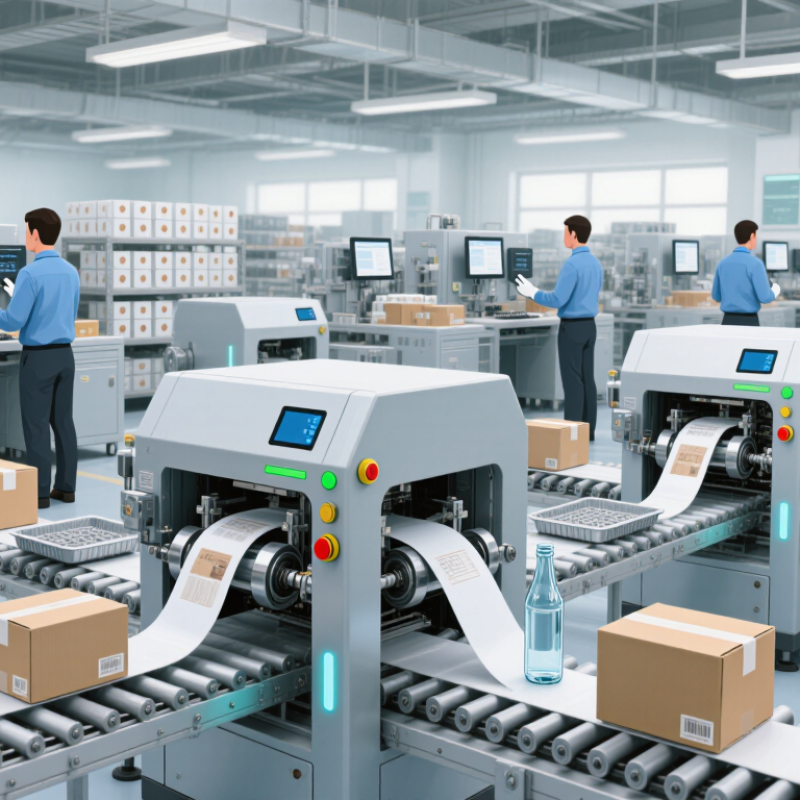
A high-speed automatic label applicator turns a moving label roll into accurately placed labels on products traveling along a production line. The roll unwinds under controlled tension, while a sensor detects each container or package. An encoder tracks conveyor movement, giving the control system a reference for when to release the next label. Timing matters. A small delay can shift a label noticeably at high speed.
The label passes over a peel plate, which separates it from its backing paper. An applicator then presses or wipes the label onto the product. Depending on the machine and package shape, this may use a roller, belt, or tamp pad. Sensors and a programmable controller coordinate these steps and can adjust feed timing as line speed changes. Some systems also check label presence or position, though inspection accuracy depends on the sensor setup and product surface.
Setup is rarely perfect on the first run. Operators typically test several products, adjust guide rails and label position, then check results at normal operating speed. Dust, uneven containers, loose web tension, or changes in product spacing can affect placement. A label that looks centered while the line is stopped may drift once production begins. Regular cleaning and careful roll changes help, but they do not replace practical testing with the actual product.
China Top 10 High-Speed Automatic Label Applicator Suppliers?
Key Criteria for Evaluating Chinese Suppliers
A high-speed label applicator should be judged by repeatable performance, not its advertised maximum speed. Ask suppliers to run your actual containers, labels, and adhesive. Record application accuracy, rejected units, changeover time, and stoppages during a sustained trial. Small details matter. A slightly curved bottle or a dusty label roll can expose problems that a showroom test misses.
Check how clearly each supplier documents controls, inspection procedures, and spare-parts availability. The International Federation of Robotics reported 276,288 industrial robot installations in China in 2023, about 51% of global installations. This indicates a substantial automation ecosystem, but it does not prove any individual supplier’s labeling quality. Request traceable test records and references for comparable production lines. Ask how quickly technicians can diagnose faults remotely, and which components must be replaced by specialists.
Compare quoted speeds under identical test conditions. Confirm whether figures include container spacing, label changes, and routine operator adjustments. Request a sample acceptance test with agreed limits for label position and restart performance. A neat demonstration is useful, but it may not reflect a full shift. I would still question any supplier that avoids a realistic trial; even careful buyers can overlook maintenance access or awkward changeovers.
Suggested evaluation weights for a buyer-led supplier assessment. These are planning weights, not measured market data or ratings of specific suppliers.
Prioritize application fit, verified line performance, and after-sales support. Validate each supplier using the same product samples, line conditions, acceptance criteria, and service requirements; adjust the weights to suit your project.
China’s Top 10 High-Speed Automatic Label Applicator Suppliers
China’s leading high-speed automatic label applicator suppliers serve beverage, food, personal-care, and logistics lines. A useful shortlist compares more than advertised speed. Check label placement tolerance, changeover time, sensor response, and support for different container shapes. Ask suppliers to run your actual labels and products. A clean test matters.
Automation is expanding across China’s manufacturing base. The International Federation of Robotics’ World Robotics 2024 report recorded 276,288 industrial robot installations in China in 2023, about 51% of global installations. This is not a label-applicator market figure, but it indicates a strong automation ecosystem. Buyers can compare the ten shortlisted suppliers against practical requirements: stable application at line speed, clear fault alerts, accessible spare parts, and integration with existing conveyors. The highest quoted speed may not hold when containers arrive unevenly.
Request a sustained production trial, not just a brief demonstration. Record rejected labels, stoppages, and adjustment time across several shifts. Small details matter: a roll change during a busy shift can expose weak design. Supplier claims deserve verification; even a good machine may need tuning. Ask for written test conditions and service response commitments before comparing quotations.
Illustrative, anonymous supplier-screening profiles for comparison—not a verified ranking or supplier-specific specification list. Speed, accuracy, and compatibility depend on the product, label, applicator configuration, and production-line conditions. Confirm all specifications and documentation directly with each supplier.
| Profile | Typical Application | Indicative Rated Speed | Typical Label Placement Accuracy | Common Container Formats | Typical Label Width Range | Line Integration | Key Items to Verify |
|---|---|---|---|---|---|---|---|
| Supplier Profile 01 | Front-and-back labeling for bottles | Up to approximately 150 containers/min | About ±1.0 mm under specified conditions | Round and oval bottles | 20–150 mm | Conveyor, product sensor, and optional coding interface | Container stability, label gap, and speed at the requested accuracy |
| Supplier Profile 02 | Wrap-around labeling for round containers | Up to approximately 200 containers/min | About ±1.0 mm under specified conditions | Vials, jars, and cylindrical bottles | 15–180 mm | Inline conveyor with container spacing and wrap belt | Minimum and maximum container diameter; label overlap control |
| Supplier Profile 03 | Top-surface labeling for cartons and trays | Up to approximately 180 products/min | About ±1.0 mm under specified conditions | Cartons, trays, and flat packs | 20–160 mm | Top belt or existing conveyor; encoder integration may be available | Product height variation and label position repeatability |
| Supplier Profile 04 | Side-panel labeling for packaged goods | Up to approximately 120 products/min | About ±1.0–1.5 mm under specified conditions | Boxes, pouches, and rectangular containers | 20–180 mm | Side-mounted applicator with product detection | Package surface, conveyor guidance, and sensor response |
| Supplier Profile 05 | Top-and-bottom labeling | Up to approximately 100 products/min | About ±1.0–1.5 mm under specified conditions | Flat cartons, food trays, and rigid packs | 20–150 mm | Upper and lower applicators synchronized to conveyor speed | Access to the underside of products and synchronization method |
| Supplier Profile 06 | Print-and-apply labeling for cases | Typically 20–60 cases/min, depending on print content | Position depends on case handling and applicator type | Shipping cases and corrugated cartons | 50–200 mm | PLC or line-control signal; data connection requirements vary | Print resolution, variable-data workflow, and verification options |
| Supplier Profile 07 | High-speed labeling for small containers | Up to approximately 250 containers/min | About ±0.5–1.0 mm under specified conditions | Small bottles, tubes, and vials | 10–100 mm | Continuous-motion or indexed conveyor, depending on configuration | Container orientation, label roll specifications, and actual test speed |
| Supplier Profile 08 | Labeling of flexible pouches | Up to approximately 120 packs/min | About ±1.0–2.0 mm under specified conditions | Stand-up and flat pouches | 20–150 mm | Pack separation and support guides may be required | Pouch stiffness, surface finish, and label adhesion performance |
| Supplier Profile 09 | Multi-panel labeling for rectangular containers | Up to approximately 100 containers/min | About ±1.0–1.5 mm under specified conditions | Rectangular bottles, cans, and rigid packs | 20–180 mm | Side belts, corner guides, or dedicated container handling | Panel alignment, container dimensional tolerance, and changeover parts |
| Supplier Profile 10 | Modular applicator for mixed production lines | Approximately 60–200 products/min, configuration dependent | About ±1.0 mm under specified conditions | Product range depends on machine options | 20–200 mm | Modular mounting; verify PLC, sensor, and communication compatibility | Changeover time, available safety documentation, and after-sales support |
China’s high-speed automatic label applicator suppliers vary in engineering depth, line-integration skills, and product focus. Some build systems for round bottles, while others handle flat cartons, pouches, or front-and-back labeling. A useful comparison starts with the actual package: its material, dimensions, surface finish, and movement on the conveyor. Small differences matter. A soft pouch behaves differently from a rigid bottle at high speed.
Look closely at label sensing, servo control, and application methods. A wrap-around station may use rollers or a belt to keep labels aligned, while tamp or wipe-on heads suit different package shapes. Ask suppliers for speed figures under stated conditions, not just peak rates. Request a live test using your label stock and containers. No specification sheet tells the whole story. Check changeover time, reject detection, guarding, and access to wear parts; these details affect daily operation.
Capabilities also include commissioning, operator training, spare-parts planning, and remote troubleshooting. Evaluate how clearly a supplier explains tolerances and maintenance intervals. Ask for sample inspection records or a documented factory acceptance test. One imperfect point: demonstrations may use cleaner, more uniform packages than a real production line. Discuss jams, label drift, and recovery procedures before purchase. A capable supplier should be willing to describe limits, not only features.
How to Choose a Supplier for Your Production Line
A fast applicator is only useful if it handles your actual containers, labels, and shift pattern. Deloitte and MAPI’s 2019 Smart Factory Study found that 86% of surveyed manufacturers expected smart factory solutions to drive competitiveness within five years. That supports investing in automation, but it does not prove a particular machine will suit your line. Fit matters more. Give suppliers your container drawings, label materials, target speed, and changeover schedule. Ask for a live test using your own products, not just a showroom sample.
Measure sustained output, label placement accuracy, reject rate, and recovery time after a stoppage. Check how the applicator connects with your conveyor, coding equipment, and inspection systems. Request documented spare-part lead times, operator training details, and local technical support. Compare total operating costs, including change parts and maintenance, rather than purchase price alone. One awkward gap often remains: a successful short test may not reflect a full production shift. Ask for test conditions in writing, and speak with users running similar containers and speeds. No scorecard removes judgment. The right supplier should explain limits clearly, not promise speed without evidence.