Leave Your Message

China Best Wholesale Automated Label Applicators Suppliers?

Choosing China’s best suppliers of Wholesale Automated Label Applicators requires more than comparing prices and production speed. A dependable supplier should understand your container shapes, label materials, adhesive behavior, line speed, and factory environment. Bottles may arrive dusty, curved, or slightly uneven. The applicator must still place each label accurately.

Mike Ferrari, a packaging innovation consultant and former Procter & Gamble packaging executive, describes packaging as “the silent salesman.” His observation applies directly to automated labeling. A crooked label can weaken shelf presentation, interrupt scanning, and create costly rework. Precision matters.

Look for suppliers with proven engineering experience. Ask for application samples using your real bottles and labels. Review placement tolerance, sensor performance, changeover time, and rejection control. A polished demonstration is not enough. Request factory references, service-response details, spare-parts availability, and operator training plans.

The best Wholesale Automated Label Applicators suppliers usually offer modular systems. These may include wraparound, front-and-back, top, or tamper-evident labeling functions. Servo-driven mechanisms can improve consistency, while vision inspection can detect missing or shifted labels. However, advanced features are not automatically better. They may add maintenance demands and unnecessary expense.

Supplier evaluation needs practical testing. Measure output over several hours, not only during a short trial. Check noise, label waste, cleaning access, and software clarity. Small weaknesses become expensive later. I would also question vague claims about “high speed” or “zero error.” Real production is less perfect.

This guide examines supplier capability, machine construction, customization, quality assurance, pricing factors, and after-sales support. The goal is a reliable purchasing decision, not merely an attractive quotation.
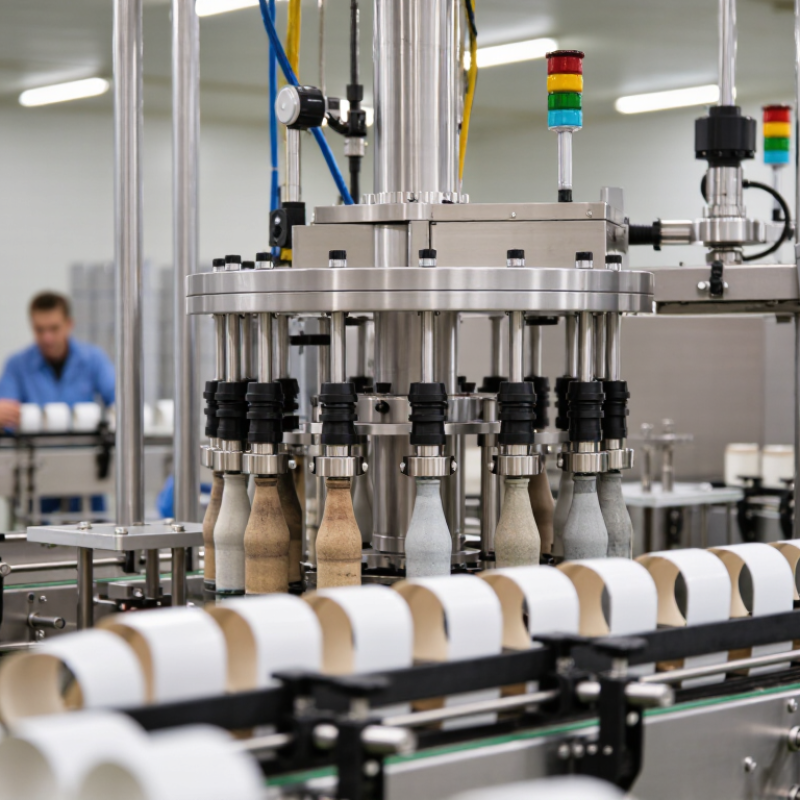
China Best Wholesale Automated Label Applicators Suppliers?

What Are Automated Label Applicators and How Do They Work?

Automated label applicators are machines that place adhesive labels onto products, cartons, jars, or shipping cases. They combine a label supply roll, drive motor, sensor, control system, and application head. During operation, a sensor detects each item on a conveyor. The controller calculates timing. A motor advances the label liner, while the applicator presents one label at a controlled speed. A tamp pad, wipe-down brush, or air blast then presses the label onto the surface. This sequence repeats with remarkable consistency.

In a working packaging line, accuracy depends on more than the machine itself. Product spacing, conveyor speed, label material, and surface temperature all affect placement. A dusty carton can weaken adhesion. A curved container may cause wrinkles. Technicians usually test several settings before production begins, checking edge alignment and label tension by hand. I have found that small adjustments to sensor position can prevent hundreds of poorly placed labels. Still, automatic does not mean maintenance-free. Roll changes, cleaning, calibration, and software checks remain necessary.

For wholesale buyers, the applicator should match product dimensions and expected output, not only the advertised speed. Ask whether the system supports different label sizes, quick changeovers, reject detection, and proper safeguarding. A fast machine may be unsuitable if operators struggle to adjust it. Power requirements and spare-part availability also matter. One detail is easy to overlook: labels must unwind consistently. Poorly wound rolls can interrupt an otherwise reliable process. Sample testing with actual products and labels exposes weaknesses that a catalogue cannot show.
Why Source Automated Label Applicators from Chinese Wholesale Suppliers?

China Best Wholesale Automated Label Applicators Suppliers?

Why Source Automated Label Applicators from Chinese Wholesale Suppliers?

China’s manufacturing depth supports competitive automated label applicator sourcing. UNIDO’s International Yearbook of Industrial Statistics 2024 reports China generated about 31.6% of global manufacturing value added in 2022. That scale usually means broader access to motors, sensors, conveyors, controllers, and stainless-steel fabrication. Buyers can request customized machines for bottles, cartons, jars, or flexible pouches. Factory-direct quotations may also reduce distributor layers and shorten communication during technical changes.

Market demand is expanding. Grand View Research estimates the global labeling equipment market will grow at approximately 4.8% annually from 2024 to 2030. Chinese wholesale suppliers increasingly support this demand with servo-driven systems, vision inspection, and touchscreen controls. During supplier evaluations, ask for application videos, label-position accuracy records, speed tests, and spare-parts lists. A practical factory audit should inspect wiring, guarding, changeover time, and actual production samples. Details matter.

The cheapest quotation is not always the strongest value. Sometimes, it hides weaker sensors or limited after-sales support. Request a written acceptance standard before payment, including tolerance, throughput, and testing materials. ISO 9001 certification can support process confidence, but it does not replace sample validation. I would test difficult label stock, because smooth samples can create false confidence. A small pilot order remains wise, even when the supplier appears technically capable.

Which Types of Automated Label Applicators Do Suppliers Offer?

China Best Wholesale Automated Label Applicators Suppliers?

Which Types of Automated Label Applicators Do Suppliers Offer?

Wholesale suppliers commonly offer pressure-sensitive, wrap-around, front-and-back, top-and-bottom, and print-and-apply applicators. Pressure-sensitive systems suit cartons, bottles, and smooth containers. Wrap-around units handle cylindrical products at higher speeds. Top-and-bottom machines label trays, pouches, and flat packages. Print-and-apply systems print variable information before applying each label. Shrink-sleeve applicators are also available, although they usually need extra heating equipment and careful film control.

MarketsandMarkets estimates the global packaging automation market will grow from about USD 78.2 billion in 2023 to USD 116.0 billion by 2028. The report shows strong demand for labor-saving equipment, but it does not measure label applicators alone. That difference matters. A supplier’s impressive production figure may not match your container shape, line speed, or label material.

Experienced buyers should request application tests using real products and labels. Check placement accuracy, changeover time, sensor stability, and rejected-label rates. For example, a round bottle may need controlled rotation, while a dusty carton may require stronger label pressure. Many suppliers provide conveyor integration, coding units, vision inspection, and stainless-steel frames. Ask for spare-parts availability and operator training, too. No machine is perfect. Even a well-built applicator can struggle with curled labels, humidity, or inconsistent containers. A short factory trial often reveals more than a polished specification sheet.

China Best Wholesale Automated Label Applicators Suppliers? - Which Types of Automated Label Applicators Do Suppliers Offer?

Applicator Type Label Format Typical Application Surface Typical Operating Speed Common Container or Product Shapes Typical Placement Accuracy Key Advantages Common Industries
Wipe-On Applicator Pressure-sensitive labels supplied on a roll Flat, slightly curved, or continuous side surfaces Up to approximately 30–100 m/min Cartons, boxes, trays, pouches, and rectangular products Typically about ±1–2 mm, depending on product control and label quality Simple construction, low maintenance, and suitable for continuous production lines Food, beverage, cosmetics, logistics, and general manufacturing
Tamp Applicator Pressure-sensitive labels from a roll Flat or recessed surfaces that require direct contact Approximately 10–60 applications/min Cartons, cases, electronic products, bags, and irregularly positioned items Typically about ±1–2 mm under stable operating conditions Works well where products are spaced apart or where wipe-on contact is difficult Warehousing, pharmaceuticals, electronics, industrial goods, and e-commerce
Tamp-Blow Applicator Pressure-sensitive labels from a roll Flat, curved, fragile, or slightly recessed surfaces Approximately 20–80 applications/min Cartons, bottles, containers, pouches, and uneven packages Typically about ±1–2 mm Applies labels without direct mechanical contact, reducing product disturbance Pharmaceuticals, cosmetics, food packaging, and medical products
Air-Blow Applicator Pressure-sensitive labels from a roll Flat, curved, delicate, or moving surfaces Approximately 20–100 applications/min Lightweight cartons, flexible packs, bottles, and products with sensitive surfaces Typically about ±2–3 mm, depending on air pressure and product distance Non-contact application and reduced risk of scratching or deforming products Food, personal care, pharmaceuticals, and lightweight packaging
Wrap-Around Applicator Pressure-sensitive labels that partially or fully wrap around the product Cylindrical or oval sidewalls Approximately 30–150 products/min Round bottles, jars, cans, tubes, and cylindrical containers Typically about ±1–2 mm in the label position Provides consistent orientation and smooth label wrapping around containers Beverage, food, cosmetics, chemicals, and health products
Front-and-Back Applicator Two pressure-sensitive labels, usually applied from separate reels Opposite flat or curved sides Approximately 30–120 products/min Oval, rectangular, and cylindrical bottles or containers Typically about ±1–2 mm between label positions Applies two labels in one operation and improves production consistency Personal care, household chemicals, food, beverages, and pharmaceuticals
Top-and-Bottom Applicator Pressure-sensitive labels from one or two label reels Upper and lower faces of products or packages Approximately 20–100 products/min Cartons, trays, food containers, clamshells, and packaged goods Typically about ±1–2 mm Suitable for simultaneous or sequential labeling of horizontal surfaces Food, logistics, retail packaging, and consumer goods
Corner-Wrap Applicator Pressure-sensitive labels extending across an edge or corner Two adjacent panels of a carton or case Approximately 10–60 products/min Cartons, cases, boxes, and tamper-evident packages Typically about ±1–2 mm, depending on carton rigidity Creates a secure corner seal and can support tamper-evident packaging designs Food, pharmaceuticals, logistics, and consumer products
Print-and-Apply System Variable-data labels printed and applied in real time Flat, curved, or selected package surfaces Approximately 10–80 labels/min Cases, cartons, pallets, parcels, and individual products Typically about ±2–3 mm for application; print quality depends on printer settings Supports barcodes, serial numbers, batch codes, dates, and order-specific information Logistics, warehousing, pharmaceuticals, food traceability, and manufacturing
High-Speed Rotary Applicator Pressure-sensitive labels from one or more reels Controlled cylindrical or shaped containers Approximately 100–400 products/min Bottles, cans, jars, and other products handled by rotary equipment Typically about ±0.5–1.5 mm with stable product handling High throughput, repeatable positioning, and compatibility with synchronized production lines Beverage, food, cosmetics, and large-volume consumer goods
Hot-Melt Glue Labeler Cut or pre-glued paper or film labels Usually cylindrical or shaped container surfaces Approximately 60–300 products/min Glass bottles, PET containers, cans, and selected cartons Typically about ±1–3 mm, depending on container and label format Suitable for high-speed applications and labels that do not use pressure-sensitive adhesive Beverage, food, household products, and industrial packaging
Roll-Fed Labeling System Continuous film or paper labels supplied on a roll Generally cylindrical containers Approximately 100–600 products/min Bottles, cans, cups, and other round containers Typically about ±1–2 mm with accurate container spacing Efficient material use, high output, and clean overlap or cut-label presentation Beverage, dairy, food, and high-volume packaging

Note: Speed and accuracy figures are typical application ranges. Actual performance depends on label dimensions, adhesive properties, product geometry, conveyor speed, sensor configuration, and line integration.

How to Evaluate China-Based Wholesale Label Applicator Manufacturers

Evaluating China-based wholesale label applicator manufacturers requires more than comparing prices. Check their engineering experience, production records, and response quality. Ask for the applicator’s speed range, label dimensions, roll-core size, and container compatibility. A reliable supplier should explain these limits clearly. Request a live video test using your actual bottles, pouches, or cartons. A polished factory video proves little.

Inspect the machine closely. Stainless steel frames, adjustable guides, stable sensors, and accessible control panels support daily operation. Ask how the system handles label gaps, uneven containers, and adhesive changes. Review wiring diagrams, spare-part lists, maintenance instructions, and quality-control records. Confirm whether technicians can provide remote training and practical troubleshooting. References from similar buyers add useful evidence, but they are not perfect proof.

Tips: Compare two or three test results, not promises. Measure label accuracy, output speed, changeover time, and rejected units. Ask for sample labels after testing. Read the warranty terms carefully. Also, leave room for doubt. A low rejection rate during a short trial may not reflect a full production shift. Before ordering, clarify packaging, inspection, delivery documents, and after-sales responsibilities in writing.

How to Evaluate China-Based Wholesale Automated Label Applicator Manufacturers

This procurement benchmark assigns practical evaluation weights to the factors that most influence automated label applicator sourcing. Buyers can use it to compare suppliers without relying only on price.

Product compliance and labeling accuracy should be verified before evaluating throughput, compatibility, after-sales support, and total ownership cost. The percentages represent recommended evaluation priorities, not company-specific performance data.

What Should Buyers Check Before Placing a Bulk Order?

China Best Wholesale Automated Label Applicators Suppliers?

Before placing a bulk order, buyers should test performance under real production conditions. PMMI’s 2024 State of the Industry report valued U.S. packaging machinery shipments at approximately $11.3 billion in 2023. That scale reflects strong demand, but demand alone does not prove machine quality. Ask suppliers for a live trial using your bottles, cartons, label stock, and adhesive. Check speed, placement tolerance, wrinkle rates, and reject accuracy. A polished video proves little.

Measure the full operating picture. Confirm maximum and minimum product sizes, roll-core dimensions, changeover time, sensor stability, and compatibility with existing conveyors. Request factory acceptance testing with written results. For high-volume lines, even a 1% labeling failure can create costly rework. The Packaging Machinery Manufacturers Institute also emphasizes lifecycle support, including training, spare parts, and service response. These details deserve contractual language, not friendly promises.

Review the total cost, not only the unit price. Smithers’ packaging market forecasts show continued growth in automated packaging demand, increasing pressure on suppliers and maintenance teams. Ask for electricity use, consumables, warranty limits, and expected maintenance intervals. Check whether common sensors and belts are locally available. Get references from users handling similar materials and speeds. One weakness remains easy to miss: a machine may perform well during acceptance testing but struggle after months of dust, vibration, or frequent SKU changes. Leave room for inspection, corrective action, and measurable penalties when performance falls short.